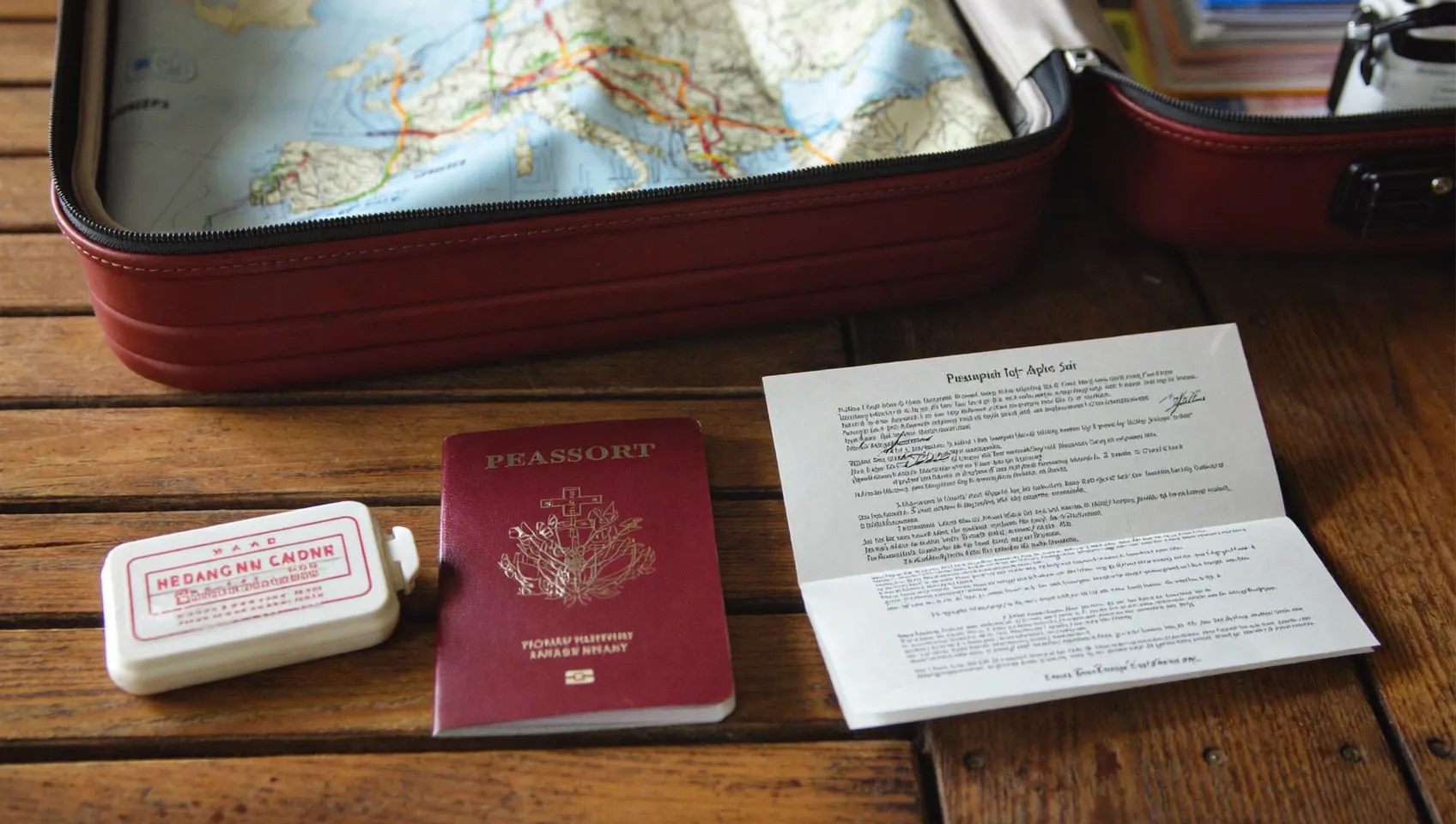
Visa-free travel opportunities for Turkish citizens are expanding! Discover the full list of countries you can visit with just your ID card or passport.
# Visa-Free Countries for Turkish Citizens: Travel with ID Card Guide
Traveling, discovering new cultures and experiencing different geographies is one of the greatest passions of modern people. However, one of the most common obstacles to this passion is the complexity and time-consuming nature of visa processes. Visa-free travel opportunities for Turkish citizens eliminate this obstacle, opening the door to spontaneous and more accessible overseas experiences. Especially in recent years, the ability to travel to certain countries with just a Republic of Turkey ID card has made travel planning easier than ever.
This guide will comprehensively cover the countries Turkish citizens can travel to visa-free and especially with an ID card, the procedural details of these trips, and important points to pay attention to. Our aim is to provide travel enthusiasts with accurate and up-to-date information to help them carry out their overseas adventures smoothly and enjoyably. The idea of sailing to new horizons with just your ID card, away from the stress and extra costs of visa applications, presents an attractive alternative for many people.
Introduction: The Appeal of Visa-Free and ID Card Travel
In today's world, freedom of travel plays a critical role in individuals' personal development, cultural enrichment and global awareness. However, obtaining a passport, visa application processes and extra costs can cause many people to postpone their overseas dreams. At this exact point, visa-free travel opportunities offered to Turkish citizens, especially destinations that can be visited with an ID card, have become a great convenience and center of attraction. This situation offers significant advantages in terms of both time and cost, making travel plans more flexible and accessible.
The ability to travel with an ID card eliminates the hassle of obtaining or renewing a passport, while visa-free travel allows you to avoid long and uncertain visa application processes. This way, you can make last-minute plans, organize short getaways, or simply find the opportunity to experience a different culture for the weekend. Thanks to agreements made with certain destinations, especially Turkey's neighboring countries, the doors to going abroad have become more open than ever for Turkish citizens. This guide will show you the way to discover the world behind these doors.
What is ID Card Travel and Why Is It Important?
ID card travel means that entry and exit procedures to a country can be carried out with just a national ID card instead of a passport. For Turkish citizens, this is made possible through protocols signed with certain countries within the framework of international agreements by the Republic of Turkey. This system was developed especially to strengthen relations with neighboring countries and to promote trade and tourism. The ID card replacing the passport simplifies travel processes, reduces bureaucratic burden and lowers travel costs. This is because expenses such as passport issuance fees and visa application fees are saved.
This type of travel is ideal especially for short visits, touristic trips or family visits. While it prevents risks such as losing or having your passport stolen, the fact that the ID card is a more practical document also shortens the preparation time before travel. However, it should not be forgotten that the ID card used for traveling with an ID must be a new generation chip ID card. It is not possible to travel abroad with old-type national ID cards. This situation makes it mandatory to check the currency and validity of your ID card before making travel plans.

List of Countries Turkish Citizens Can Travel to with an ID Card
Turkish citizens can travel to some countries within the framework of certain agreements using only their new generation chip ID cards. This situation offers a great advantage especially for short-term and spontaneous trips. Here are the main countries that can be visited with an ID card and important details regarding these trips:
- Azerbaijan: Since 2021, Turkish citizens have been able to travel to Azerbaijan for visits of up to 90 days without a passport, using only their new type chip ID cards. This agreement has further strengthened the bonds between the two brotherly countries and increased touristic, commercial and cultural exchange. While it is generally recommended that your ID card's validity period be at least 6 more months from the end date of travel when traveling to Azerbaijan, legally only a valid ID card is sufficient. However, it will be useful to pay attention to this period in case of any mishap.
- Georgia: The ID card travel agreement between Turkey and Georgia has been in effect for many years and has greatly facilitated border crossings between the two countries. Turkish citizens can enter Georgia for stays of up to 1 year without a passport, using only their new type chip ID cards. This is a great convenience especially for those crossing by road via the Sarp Border Gate. Georgia is a popular destination with its natural beauty, historic cities and affordable living. It is important that your ID card is not worn out and is legible to avoid problems at border crossings.
- Ukraine: With the agreement signed between Turkey and Ukraine in 2017, Turkish citizens have the right to travel to Ukraine for visits of up to 90 days without a passport, using only their new type chip ID cards. However, due to the current war situation in Ukraine, this travel option is not practical at the moment and there is a travel warning. When the situation normalizes in the future, the option of traveling to this country with an ID card can be actively reconsidered. It is vital to check the Ministry of Foreign Affairs' current travel warnings before making travel plans.
- Moldova: Turkish citizens can enter Moldova for touristic or business visits of up to 90 days without a passport, using only their new type chip ID cards. Moldova stands out especially for wine tourism and its natural beauty waiting to be discovered. This agreement has strengthened relations between the two countries and created a new visa-free and ID card travel destination for Turkish citizens. When traveling, you should make sure that the validity period of your ID card is sufficient.
- Turkish Republic of Northern Cyprus (TRNC): TRNC has always been a destination offering passport-free travel for Turkish citizens. It is possible to enter TRNC with new generation chip ID cards. TRNC is an important destination offering holiday, education and business opportunities as the pearl of the Mediterranean. In addition to your ID card, having an internationally valid driving license or other identification documents with you may be useful for possible situations.
Important Note: Before making travel plans, it is essential to check the current entry requirements and legal regulations of the country you are going to. Agreements between countries may change from time to time or may be subject to certain conditions. Therefore, following the Ministry of Foreign Affairs' official website and the announcements of the relevant country's representation in Turkey is the most reliable method.
Procedural Details and Required Documents for ID Card Travel
Although traveling with an ID card seems simpler than traveling with a passport, it is important to pay attention to some procedural details and complete the necessary documents completely. For a successful border crossing, having your ID card alone is not enough; you may need to make some additional preparations.
First of all, the validity period of your new generation chip ID card must be valid for at least 6 more months from the end date of your planned travel. Although some countries show flexibility on this matter, complying with this rule as a general security measure will prevent possible problems. Make sure your ID card is not worn out and the information on it is clear and legible. In addition, there are additional documents that border officials may request from you. These include;
- Documents Showing the Purpose of Travel: For touristic trips, hotel reservations or the address of the place you will stay; for business trips, documents such as an invitation letter may be requested.
- Return/Onward Ticket: A return ticket showing that you will leave the country you are going to, or a ticket to transit to another country. This proves that you do not intend to settle in the country illegally.
- Sufficient Financial Resources: Documents such as bank account statements, credit cards or cash showing that you can cover your expenses during your trip. Countries usually want to see that you can meet a certain daily spending limit.
- Travel Health Insurance: Although not mandatory for some countries, it is strongly recommended to get travel health insurance to protect yourself against health problems that may occur abroad. Especially after the COVID-19 pandemic, many countries have requested travel health insurance at entry.
At border gates, you must present your ID card to the official officer, just as at passport control points. The information on the chip of your ID card will be read and identity verification may be made with facial recognition systems. Being calm and cooperative during this process will speed up your crossing. Also, if you are traveling with children, remember that a passport is generally required for children. The most accurate way is to confirm special regulations regarding children traveling with an ID card from the Ministry of Foreign Affairs or the relevant country's consulate.

Other Countries That Can Be Visited Visa-Free (With Passport)
Although ID card travel opportunities are quite attractive, the list of countries Turkish citizens can visit visa-free is much wider and also includes destinations that can be entered with a passport. These countries generally grant visa exemption for certain periods such as 30, 60 or 90 days. Knowing which countries you can travel to visa-free with your passport allows you to expand your travel plans to a wider geography.
While the visa-free travel list is constantly being updated, popular visa-free destinations for Turkish passport holders include Balkan countries (Albania, Bosnia and Herzegovina, Montenegro, North Macedonia, Serbia, Kosovo), some Latin American countries (Argentina, Brazil, Chile, Colombia, Ecuador, Paraguay, Peru, Uruguay, Venezuela), some Asian countries (Japan, South Korea, Singapore, Malaysia, Thailand, Indonesia, Philippines, Hong Kong), some African countries (Morocco, South Africa, Tunisia) and Middle Eastern countries (Qatar, Jordan, Lebanon). Each of these countries may have different stay durations and sometimes additional entry conditions (such as a certain amount of cash, hotel reservation or return ticket).
When traveling visa-free with your passport, as with ID card travel, you need to pay attention to the validity period of your passport. Generally, a requirement is sought that your passport be valid for at least 6 more months from the end date of your travel. It is also important that your passport has blank visa pages, as these pages will be needed for entry and exit stamps. The list of countries offering visa-free travel is quite dynamic; therefore, it is of great importance to check the current visa regime and entry conditions of the country you are considering traveling to through reliable sources such as MY Visa or the official announcements of the Ministry of Foreign Affairs.
Pre-Travel Checklist and Important Tips
No matter how easy it is to travel abroad visa-free or with an ID card, careful preparation beforehand is essential for a smooth experience. Here are the critical points and practical tips you should review before your trip:
- Document Check:
* ID Card/Passport Validity: Make sure it is valid for at least 6 more months from the end date of your travel. If you are traveling with an ID card, having a new generation chip ID card is mandatory.
* Additional Documents: Keep all documents that may potentially be requested with you, such as return tickets, hotel reservations, travel insurance policy, documents showing sufficient financial resources. Also keep digital copies of these documents on your phone or in your email.
* Documents for Children: If you are traveling with children, check the validity of their passports and/or ID cards. Some countries may require a consent letter from children traveling with their parents.
- Country Entry Requirements:
* Current Information: Check the most current entry requirements (COVID-19 measures, vaccination requirements, health forms, etc.) from the Ministry of Foreign Affairs' or the relevant country's consulate's website in Turkey.
* Currency and Expenses: Learn the currency of the country you are going to and carry enough cash with you. Make sure your credit card is valid abroad and your spending limit is sufficient.
* Local Laws and Culture: Research the local laws and cultural norms of the destination country. Having information especially on topics such as traffic rules, alcohol consumption, dress style can prevent undesirable situations.
- Health and Safety:
* Travel Health Insurance: Even though some countries do not require it, getting comprehensive travel health insurance is vital for emergencies, illnesses or accidents that may occur abroad.
* Emergency Contact Information: Record the contact information of Turkey's Embassy or Consulate in that country. Also keep the contact information of your relatives to be reached in emergencies with you.
* Medications: If you have prescription medications you use regularly, carry a sufficient amount with you and get an English prescription or report for your medications from your doctor.
- Transportation and Accommodation:
* Flight and Transfer Information: Plan your flight times, transfer details and transportation options from the airport to your accommodation in advance.
* Accommodation Reservations: Keep confirmations of your accommodation reservations such as hotel, hostel or Airbnb with you.
- Communication:
* Roaming/Local SIM Card: Plan how you will use your phone abroad (roaming packages or purchasing a local SIM card).
* Translation Apps: If you do not know the language of the country you are going to, download translation apps to your phone.
This checklist will guide you at every stage of your trip and help you minimize possible mishaps. Remember, good preparation is the key to an enjoyable trip.
Frequently Asked Questions and Answers
Many questions may arise in the minds of those considering traveling abroad visa-free or with an ID card. Here are the most common questions and answers on this topic:
Question 1: Can I travel with an ID card using an old-type national ID?
Answer: No, unfortunately you cannot. ID card travel agreements are only valid for new generation chip Republic of Turkey ID cards. It is not possible to travel abroad with old-type national ID cards. Before making travel plans, you should make sure your ID card is the new type, and if it is the old type, you need to apply for a new ID card from the General Directorate of Population and Citizenship Affairs.
Question 2: Can children also travel with an ID card?
Answer: In most cases, a passport is required for children. ID card travel agreements are generally valid for adults or may include additional conditions for children. For example, while children can also enter Georgia with an ID card, the situation may differ for other countries. It is of great importance to confirm this information from the consulate of the country you will travel to or from the current announcements of the Ministry of Foreign Affairs. Also, if children are not traveling alone, their parents must also have a new type ID card.
Question 3: Will it be a problem if the validity period of my ID card is close to the end date of travel?
Answer: Yes, it can be a problem. Although some countries only accept a valid ID card, general international travel rules and the practice of many countries require that the travel document (ID or passport) be valid for at least 6 more months from the end date of travel. In the event of a possible mishap (travel delay, health problem, etc.), staying abroad with a document whose validity period is short can create problems. Therefore, check the validity period of your ID card and apply to renew it if it is short.
Question 4: Do I need to apply for a visa when traveling with an ID card?
Answer: No, you do not need to apply for a visa for the countries you travel to with an ID card. In fact, the main purpose of these agreements is to eliminate the visa and passport requirement. However, this situation is only valid for a certain stay period (usually 30, 60 or 90 days). If you plan to stay in that country longer, then you may need to apply for a residence permit or long-term visa according to the relevant country's immigration laws.
Question 5: Do I need to pay any fee upon entry?
Answer: You generally do not need to pay an additional visa fee for entry into countries you travel to visa-free or with an ID card. However, some countries may request small entry fees such as airport tax or tourism tax. Such fees are usually included in the ticket price or can be paid in cash at the border gate. It will be useful to research such possible additional fees before travel.
Question 6: Is there a possibility I cannot cross the border when traveling with an ID card?
Answer: Yes, although rare, such a possibility exists. Officials at the border gate have the right not to admit a person into the country in line with national security or immigration policies. This situation can usually arise due to reasons such as insufficient financial resources, lack of a return ticket, past illegal stay or criminal record. You can minimize this risk by ensuring all your documents are complete and up to date and that your purpose of travel is clear.

Secure Your Travel Plans with MY Visa
Traveling visa-free and with an ID card is a great opportunity that makes overseas experiences more accessible and enjoyable. However, although such trips may seem easy, international travel rules and country-specific requirements can change continuously. Therefore, it is vital to access current and accurate information when planning travel. Incorrect or incomplete information can cause your trip to be cancelled, cause problems at the border, or result in unexpected costs.
As MY Visa, we offer comprehensive consultancy services for Turkish citizens to carry out their overseas travels smoothly and safely. Whether you are going to a country that requires a visa application, or need current information for a destination you will travel to visa-free or with an ID card, our expert team is ready to support you. You can visit myvisa.tr to get professional help about the most current entry requirements of the country you will travel to, required documents, travel insurance and all other procedural details. Our priority is to eliminate any uncertainty you may encounter in your travels and to ensure you have a peaceful journey experience. We wish you safe and enjoyable travels!
Frequently Asked Questions
Which countries can Turkish citizens visit with an ID card?
Turkish citizens can enter some Balkan countries and specially agreed destinations, primarily the Turkish Republic of Northern Cyprus, with their Turkish ID card. With a passport, visa-free or visa-on-arrival travel is possible to Azerbaijan, Bosnia and Herzegovina, Georgia, Jordan, Qatar and many more countries. It is recommended to check the official website of the Turkish Ministry of Foreign Affairs for the current and exact list.
How many countries can Turkish passport holders enter visa-free in 2026?
As of 2026, the Turkish passport offers visa-free or visa-on-arrival/e-visa entry to approximately 110 countries. These countries include those in Central Asia, the Middle East, Africa and some Caribbean countries. The visa requirement continues for destinations such as the Schengen area and the United States. Since the passport power index ranking is updated every year, it is important to check the current list before traveling.
How many months must a passport be valid for visa-free travel?
The vast majority of countries visited visa-free require that your passport be valid for at least 6 more months on the date of entry. Some countries have set this period at 3 months, while for ID card travel, it is sufficient that the card's validity date covers the return of the trip. It is recommended to confirm the current requirements from the embassy or official tourism site of the country you are going to before travel.
How long can Turkish citizens stay on visa-free travel?
The length of stay on visa-free trips varies from country to country. In most countries, this period ranges between 30 and 90 days. For example, while visa-free stays of up to 90 days are possible in Azerbaijan and Georgia, this period is limited to 30 days in some Middle Eastern countries. Exceeding the permitted period should be approached carefully, as it may negatively affect your visa applications for future travels.
What documents should I carry when traveling to visa-free countries?
The basic document for visa-free travel is a valid passport or ID card. In addition to these, a return ticket, accommodation reservation, bank statement showing sufficient financial resources and travel health insurance may also be requested at border gates. Especially when traveling to countries that apply visa-on-arrival, preparing these documents completely speeds up the entry process and prevents possible problems.
Related Articles
My Travel Team
Travel Editor
The My Travel team prepares up-to-date travel, visa and tourism information and guides.