Attention to those planning to travel to Bosnia and Herzegovina! Will a passport be required as of 2026? Up-to-date information and travel tips in this article.
An important reminder for Turkish citizens planning to travel to Bosnia and Herzegovina in 2026: Yes, a valid passport is mandatory for entry into Bosnia and Herzegovina. Traveling with an ID card is unfortunately not possible, and this rule is not expected to change in 2026 or beyond. Be sure to check the validity period of your passport before your trip.
Does Bosnia and Herzegovina Require a Passport in 2026? Up-to-Date Travel Information
Hello dear travel enthusiasts! As My Travel's expert blog writer, I'm here to clarify a question that frequently comes up and especially causes confusion when planning trips to the Balkans: "Can you travel to Bosnia and Herzegovina without a passport?" or "Will there be a passport requirement for Bosnia and Herzegovina in 2026?". I will answer these questions and much more, combining the most up-to-date and reliable information with our first-hand experience.
The Balkans are one of those regions that feel almost like a second home to us, with visa-free travel opportunities for Turkish citizens and strong cultural and historical ties. However, while some Balkan countries allow entry with an ID card, the passport requirement continues for others. This distinction forms one of the most critical stages of travel planning. Bosnia and Herzegovina is one of the countries to be mindful of in this regard. Let's dive deep into this topic and learn all the details so you can make your travel plans for 2026 and beyond with peace of mind.
Entry Requirements for Bosnia and Herzegovina: Passport Requirement (2026 and Beyond)
At My Travel, we have taken hundreds of guests to Bosnia and Herzegovina's enchanting cities, lush nature, and deep-rooted history over the years. Based on this experience, we can clearly state that Bosnia and Herzegovina requires a valid passport from Turkish citizens for entry into the country. This rule has been in effect for many years, and there is no official statement or expectation of any change in 2026 or beyond. Therefore, you are required to carry a valid passport for any type of trip to Bosnia and Herzegovina (tourism, business, education, etc.).
The validity period of your passport is also quite important. It is generally recommended that your passport remain valid for at least 6 months from the date of entry into the country you are traveling to. For Bosnia and Herzegovina specifically, having a passport that covers your planned stay and, if possible, remains valid for some time after your return date is a critical step to avoid any problems. Even the smallest issue at border crossings or airports can disrupt your entire travel plan. Therefore, you must check both the validity period and the physical condition of your passport. Passports with torn, wet, or deformed pages may also be rejected by border officials. Remember, your passport is your international identity and is expected to be in flawless condition.
Turkish citizens are exempt from visa requirements for tourist travel to Bosnia and Herzegovina, provided they do not exceed 90 days within a 180-day period. This visa exemption does not eliminate the passport requirement; on the contrary, it means you can enter visa-free as long as you have a passport. In other words, if you have a passport, you don't need to get a visa, but if you don't have a passport, you cannot enter the country. Understanding this distinction well forms the foundation of your travel planning. Otherwise, you may encounter unpleasant surprises at the airport or border crossing, and at My Travel, we always strive to provide the correct information to prevent such situations.
Can You Travel with an ID Card? A Detailed Review
"Since it's visa-free, can't I also enter with an ID card?" is one of the first questions that comes to mind for many people considering travel to the Balkans. You're right that some Balkan countries (for example North Macedonia, Serbia, Albania) allow Turkish citizens to enter with their new chip-equipped ID cards. However, Bosnia and Herzegovina is not among these countries.
Bosnia and Herzegovina strictly requires a passport from Turkish citizens for entry into the country. Your Republic of Turkey ID card is not accepted as a valid travel document at Bosnia and Herzegovina's border crossings. This rule is directly related to the country's internal security policies, international agreements, and border controls. Every country has its own rules regarding travel documents within its sovereign territory, and complying with these rules is the responsibility of every traveler. Therefore, the dream of "passport-free Bosnia and Herzegovina" unfortunately does not reflect reality.
Misunderstandings on this topic generally stem from the general perception that "the Balkans can be visited visa-free." Yes, many Balkan countries can be visited visa-free, but whether a passport or ID card is required as a travel document varies from country to country. At My Travel, we strongly recommend paying attention to these fine details when planning your trips. Always confirming information from the most up-to-date and official sources is the surest way to prevent potential problems. With this article, we aim to guide you on this matter.
Things to Consider When Preparing Your Passport
There are several important points to consider when preparing your passport for your trip to Bosnia and Herzegovina. These details are vital for your trip to go smoothly:
- Validity Period: As mentioned above, it is strongly recommended that your passport remain valid for at least 6 months from the date you enter Bosnia and Herzegovina. While there is no official rule such as "stay duration + 3 months" specifically for Bosnia and Herzegovina, the 6-month rule in international travel standards protects you against unexpected situations (flight delays, extended stays, etc.).
- Physical Condition of the Passport: Make sure your passport's pages have no tears, water damage, scribbles, deformation, or any other damage. In particular, the page containing your identity information and your photo must be clear and legible. Damaged passports may be rejected by border officials, and you may be denied entry into the country.
- Number of Blank Pages: It is important to have a sufficient number of blank pages in your passport for entry and exit stamps. Generally, at least 2-3 blank pages are expected. If your passport's pages are about to be full, it would be wise to apply for a renewal before your trip.
- Passport Type: Turkish citizens holding an Ordinary (Maroon), Special (Green), Service (Gray), or Diplomatic (Black) Passport are subject to the visa exemption and passport requirement rules mentioned above. Regardless of your passport type, it is essential that it is valid and has sufficient remaining validity.

Performing these checks well in advance of your trip will save you from last-minute stress. Passport renewal procedures can take a certain amount of time, so don't forget to factor this into your planning. This is why at My Travel, we always warn our guests: "Check your passport first!" A small oversight can turn into a big disappointment.
Visa Requirements and Exceptions (For Turkish Citizens)
Let's clarify the matter further: Turkish citizens do not need a visa for tourist travel to Bosnia and Herzegovina. This applies to both ordinary passport holders and special, service, or diplomatic passport holders. You can enter visa-free with your passport, provided you do not exceed 90 days within a 180-day period. This is one of the important factors that makes Bosnia and Herzegovina attractive for Turks. You can plan your trip simply with a valid passport, without having to deal with processes like visa applications, document collection, or appointment scheduling.
However, this visa exemption may not apply or may require additional conditions in some cases:
- Stays Longer Than 90 Days: If you plan to stay in Bosnia and Herzegovina for longer than 90 days (for example, for reasons such as education, long-term work, or family reunification), you will need to apply for a long-term visa from Bosnia and Herzegovina's diplomatic missions in Turkey (Embassy or Consulate). Such visas are divided into different categories depending on the purpose of stay, and each has its own specific application conditions and documents.
- Travel for Work or Settlement Purposes: The tourist visa exemption does not cover travel for work or settlement purposes. For such trips, you must apply for the relevant visa type and obtain a residence/work permit.
- Citizens of Other Countries: If you are not a Turkish citizen, you need to find out the visa regime Bosnia and Herzegovina applies to citizens of your country. Different rules may apply to citizens of different countries. You can obtain this information from Bosnia and Herzegovina's Ministry of Foreign Affairs official website or your country's diplomatic mission in Bosnia and Herzegovina.
In short, for Turkish citizens, the doors of Bosnia and Herzegovina are wide open visa-free, with a passport. This situation provides great convenience for making spontaneous travel decisions or taking short getaways. Still, it is always best to check for up-to-date information before finalizing your travel plans.
Travel Planning for 2026 and Current Status
Looking at current data and international relations, the travel arrangements between Turkey and Bosnia and Herzegovina are expected to continue in the same way in 2026 and beyond. That is, the right of Turkish citizens to enter Bosnia and Herzegovina visa-free with a passport is expected to remain valid for the foreseeable future. The strong diplomatic and cultural ties between the two countries support the continuity of such travel conveniences.
However, unexpected global developments (pandemics, security situations, political changes, etc.) can lead to sudden changes in travel rules. Therefore, as your travel date approaches, especially if you are planning for a date as far ahead as 2026, we strongly recommend confirming up-to-date information from the following sources:
- Republic of Turkey Ministry of Foreign Affairs: You can follow current announcements and travel advisories regarding the countries you plan to visit.
- Bosnia and Herzegovina's Embassy or Consulate in Turkey: These are the most official and direct sources where you can obtain information.
- International Air Transport Association (IATA) Travel Centre: An up-to-date database used by airlines that includes entry and exit rules for countries.
At My Travel, we closely follow these developments for you and continue to share the most up-to-date information on our blog. We are happy to be with you at every stage of your travel planning. Especially for a trip as far ahead as 2026, it would be wise to take advantage of early booking opportunities and make flexible plans in case of possible changes.

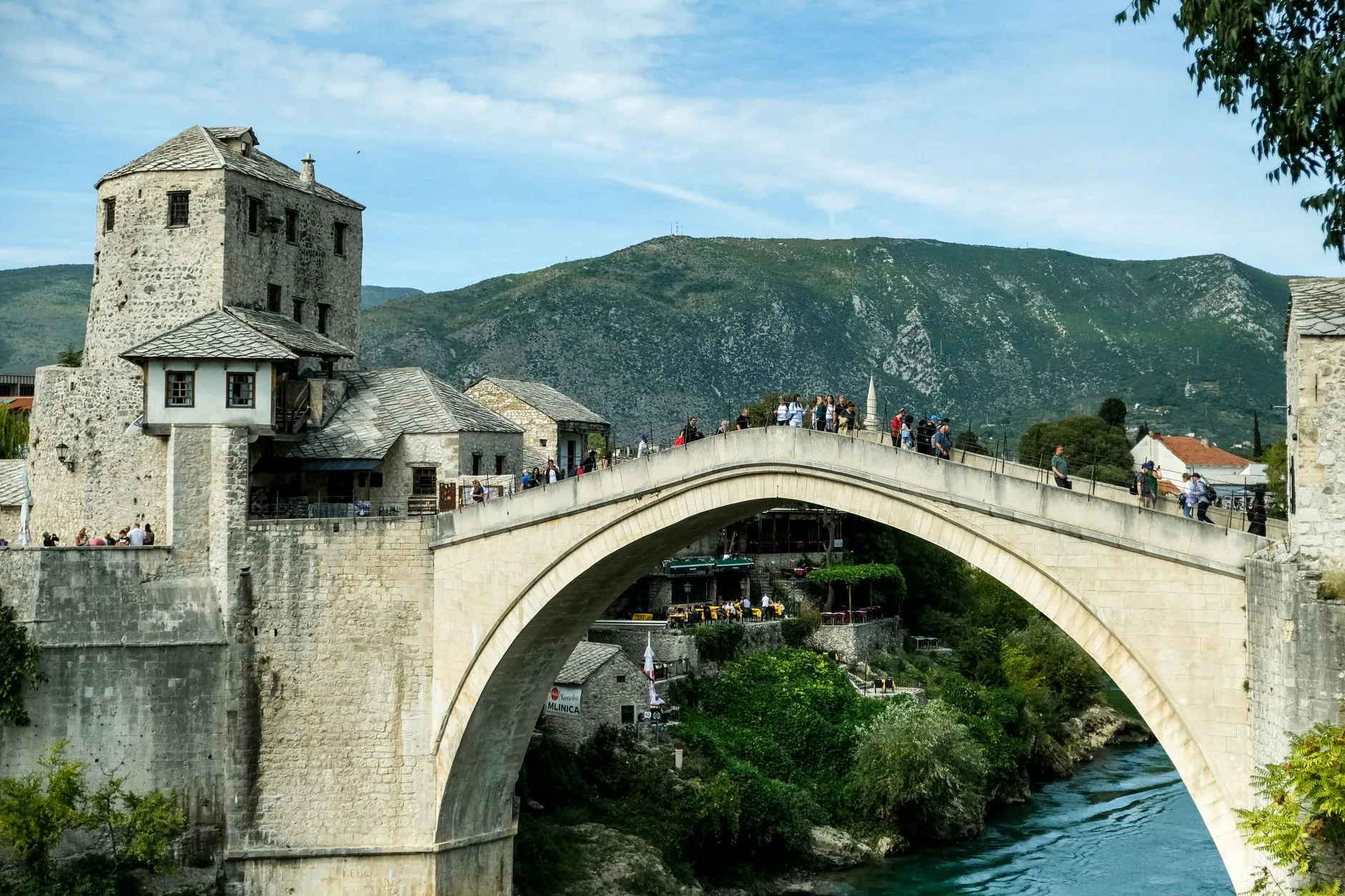
Bosnia and Herzegovina is a unique destination offering different beauties in every season, one that will capture your heart and refresh your soul. There is so much to discover, from the historical texture of Sarajevo to the enchanting view of the Mostar Bridge, from the peaceful atmosphere of the Blagaj Tekke to the cool waters of the Kravice Waterfalls. If your passport is ready, all that's left is to pack your bags and hit the road!
Why Isn't It Possible to Go to Bosnia and Herzegovina Without a Passport? Border Controls and Security
The answer to the question "Why can you enter some countries with an ID card while a passport is required for Bosnia and Herzegovina?" lies in international law, security agreements, and countries' sovereign rights. Every country sets certain entry-exit rules to protect its borders and citizens. A passport is the most fundamental official document, internationally recognized, that proves a person's nationality, identity, and right to travel.
- International Standards: Passports are issued in accordance with standards set by the International Civil Aviation Organization (ICAO). These standards enhance the security features, readability, and resistance to forgery of passports. ID cards, on the other hand, are generally documents valid within national borders and may not meet international standards.
- Border Security: As a candidate country for European Union membership, Bosnia and Herzegovina acts in accordance with international norms regarding border security. In the EU integration process, tightening border controls and requiring internationally recognized travel documents is an important step. Passports may contain biometric data, allowing for more advanced security screening at border crossings.
- Data Sharing and Tracking: The information of people entering the country via passport is recorded in more detail and can be shared with international security organizations when necessary. This is critically important for combating terrorism, organized crime, and illegal migration. Such data sharing and tracking may be more limited for travel conducted with ID cards.
- Principle of Reciprocity: Travel conveniences between countries are generally based on the principle of reciprocity. Agreements between Turkey and Bosnia and Herzegovina allow Turkish citizens to enter visa-free but with a passport, while Bosnia and Herzegovina citizens can also travel to Turkey under similar conditions.
In conclusion, going to Bosnia and Herzegovina without a passport is not just a rule violation, but also contrary to the country's efforts to comply with security and international standards. If you do not have a passport at the border crossing, you will certainly not be allowed to enter the country and will be sent back to where you came from. This means both time and financial loss. At My Travel, we always recommend acting in accordance with laws and rules so that you do not experience any disruption during your travels.
Plan Your Bosnia and Herzegovina Trip with My Travel
Are you ready to discover the unique beauties of Bosnia and Herzegovina? At My Travel, we are here to turn your dream trip to Bosnia and Herzegovina into reality. With our expert team, we plan every detail for you, from flight tickets to accommodation, from local tours to private guiding services.
Whether you want to discover Sarajevo's Ottoman heritage, Mostar's historic bridge, or its lush nature, we ensure you have an unforgettable experience with our specially prepared travel programs. Once you make sure your passport is valid, leave the rest to us!
My Travel's experienced staff knows every corner of Bosnia and Herzegovina and has the knowledge to offer you the most special routes. We offer a wide range of options, from cultural tours to nature walks, from gastronomy tours to historical discoveries. We answer all your pre-trip questions and share the most up-to-date information on topics such as visas and passports with you.
If you are ready to take the first step toward your dream trip to Bosnia and Herzegovina, visit mytravel.tr now or contact us. With the My Travel difference, embark on a safe and enjoyable journey to the heart of Bosnia and Herzegovina!
Conclusion
Dear travel enthusiasts, the answer to the question "Does Bosnia and Herzegovina Require a Passport in 2026?" is quite clear: Yes, it does. A valid passport is mandatory for Turkish citizens traveling to Bosnia and Herzegovina, and this is not expected to change in 2026 or beyond. Traveling with an ID card is unfortunately not possible.
Checking your passport's validity period, paying attention to its physical condition, and making sure it has enough blank pages are the keys to a smooth trip. Although visa-free travel provides great convenience, the passport requirement is the fundamental condition for this convenience.
At My Travel, we have shared all this information with you so you don't experience any disruption while discovering the historical and natural beauties of Bosnia and Herzegovina. Start making your plans for a Bosnia and Herzegovina trip full of cultural richness and unforgettable memories, and leave the rest to us!
Frequently Asked Questions
Is it possible to go to Bosnia and Herzegovina without a passport?
No, it is not possible to go to Bosnia and Herzegovina without a passport. Turkish citizens must have a valid passport to enter the country. Travel with an ID card is not accepted.
How long does my passport need to remain valid?
It is strongly recommended to have a passport that remains valid for at least 6 months from the date you enter Bosnia and Herzegovina. This will protect you against possible unexpected situations.
Do Turkish citizens need to obtain a visa for Bosnia and Herzegovina?
No, Turkish citizens are exempt from visa requirements for tourist travel, provided they do not exceed 90 days within a 180-day period. However, the passport requirement continues to apply.
Is a change expected in Bosnia and Herzegovina's travel rules in 2026?
Currently, no change is expected in Bosnia and Herzegovina's travel rules (passport requirement and visa-free entry) for 2026. However, as your travel date approaches, it is always best to confirm up-to-date information from official sources.
Frequently Asked Questions
Is a passport mandatory to go to Bosnia and Herzegovina?
Yes, a valid passport is mandatory for Turkish citizens to enter Bosnia and Herzegovina. Entry to Bosnia and Herzegovina with an identity card is not possible. It is recommended to make sure your passport's validity period is at least 6 months before your trip.
Is a visa required for Bosnia and Herzegovina in 2026?
As of 2026, Turkish citizens can travel to Bosnia and Herzegovina visa-free. Under the bilateral agreement between Turkey and Bosnia and Herzegovina, there is a right to stay visa-free for up to 90 days. However, the passport requirement continues, and entry with an ID card is not possible.
Can I go to Bosnia and Herzegovina with my ID card?
No, entry to Bosnia and Herzegovina with a Turkish ID card is not possible. This situation does not change in 2026 either. You must obtain a valid and up-to-date passport for your trip. Make sure your passport's expiration date is at least 6 months valid from the date of your trip.
How long should the Bosnia and Herzegovina passport validity period be?
It is recommended that the passport of Turkish citizens traveling to Bosnia and Herzegovina be valid for at least 6 months from the date of travel. Be sure to check your passport's validity period before your trip; otherwise, you may risk being turned back at the border crossing.
How many days can you stay in Bosnia and Herzegovina?
Under the bilateral agreement between Turkey and Bosnia and Herzegovina, Turkish citizens can stay in Bosnia and Herzegovina visa-free for up to 90 days within any 180-day period. Since exceeding this period is considered a legal violation, it is important to plan your trip accordingly.
Related Articles
My Travel Team
Travel Editor
The My Travel team prepares up-to-date travel, visa and tourism information and guides.