Baby food is exempt from the 100 ml liquid limit. How to carry it in your cabin bag, what to do at security, and which mistakes to avoid: a short, clear guide.
Yes, you can bring baby food on a plane. Baby food and medicines are exempt from the 100 ml liquid restriction; passengers may carry the necessary amount with them. Still, to avoid problems at the security checkpoint, carry the baby food in your cabin bag, separately and in an easily accessible spot; determine the amount based on the length of your journey.
In short
- Baby food and medicine are exempt from the 100 ml liquid limit; only the necessary amount may be carried.
- Carry the baby food in your cabin bag, in an easily reachable compartment; put only extra stock in checked baggage.
- The exemption does not remove the security check; declare the baby food, and if asked, open it and show it to staff.
- Check your airline's current rules regarding breast milk and water.
The core of the rule: Baby food is exempt from the liquid limit
Baby food and medicines are exempt from the 100 ml liquid restriction. In other words, if you're carrying ready-made liquid formula, a bottle, or a jar of baby food, you don't have to fit them into 100-millilitre containers; you may carry the necessary amount with you.
The key phrase here is necessary amount. The exemption is meant for the baby food needed during the journey, not for stockpiling. Determine a reasonable amount by taking into account the flight duration, connection waiting time, and possible delays. If you carry more than needed, staff may question the amount.
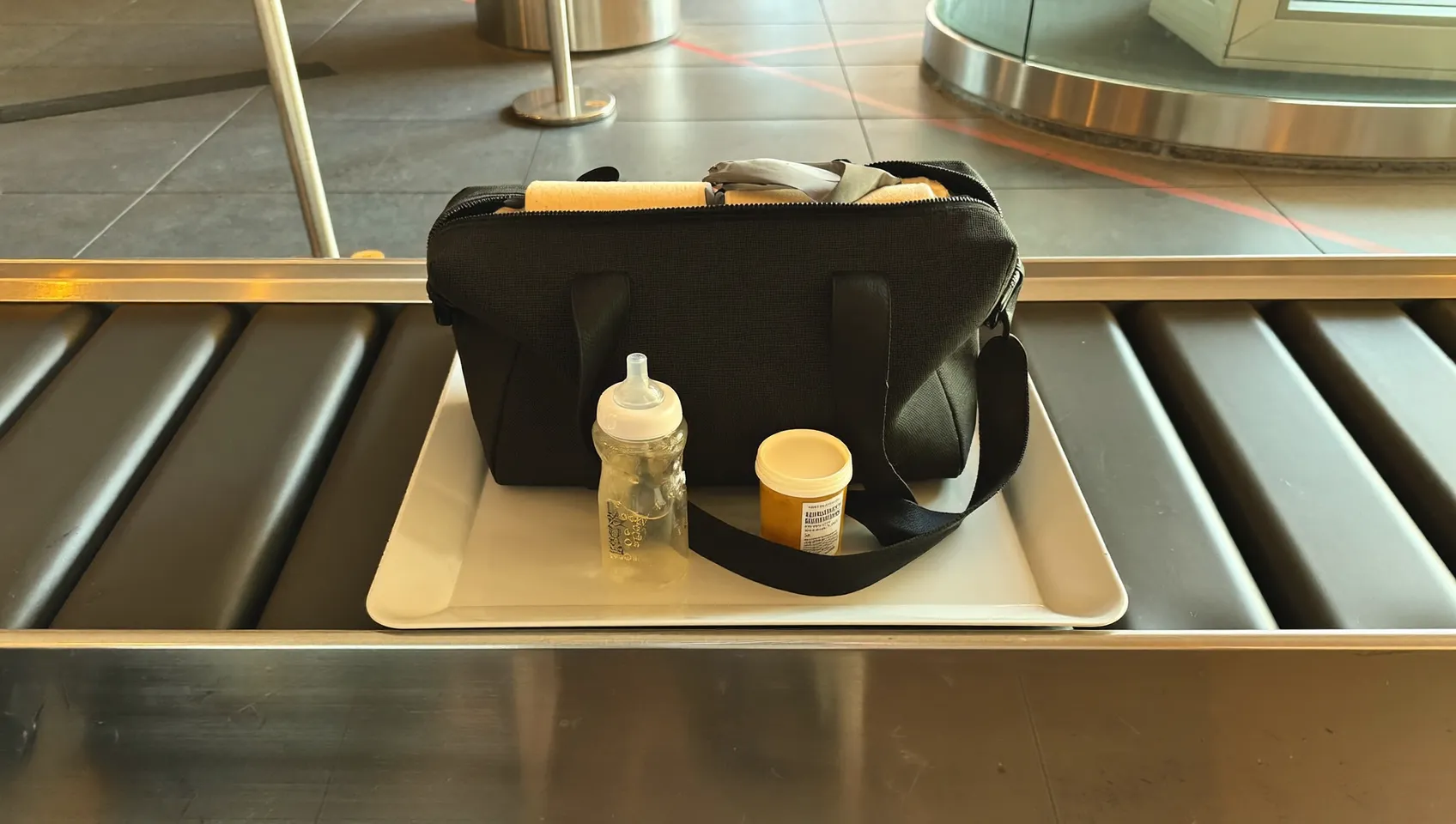
The exemption keeps baby food outside the liquid limit; it does not exempt you from the security check. The baby food may be passed through the scanner or examined separately by staff. So don't bury it at the bottom of your bag—keep it somewhere easy to take out. Practices may vary slightly by airport and airline; check your airline's current rules. If you haven't bought your ticket yet, you can compare flights suitable for travelling with a baby on the flight ticket search page.
Difference between cabin baggage and checked baggage
Carry baby food in your cabin baggage. The liquid limit rule applies to items carried in the cabin, and the baby food exemption is useful precisely in this section. Since you'll need the baby food during the flight, it should be within reach anyway.
There's no liquid limit issue with baby food placed in checked baggage, but there are other risks:
- Baggage may be delayed or lost; your baby may be left without food.
- Jar and bottle lids may get damaged in the cargo hold, and contents may leak onto other items.
- You won't have access to the baby food during the flight or at connections.
You can find the steps to follow if your baggage is lost in the what to do for lost baggage guide. Still, the safest method is to always keep the first day's food in your cabin bag under all circumstances.
The weight and size limit for cabin bags varies by airline. Check your airline's current rules to see whether baby food is included in this allowance.
Carrying by type of baby food
The form of the baby food affects how it will be handled at security.
Powdered formula
Powdered formula is not a liquid; it doesn't run into the liquid rule. Still, staff may have you open the container during the check or examine it separately. Carrying it in its original packaging or in a container that is clearly identifiable as baby food makes things easier.
Ready-made liquid formula and jarred baby food
These products are liquid or puree in consistency, so they would normally run into the restriction; this is exactly where the baby food exemption comes in. You may carry the necessary amount. Keep lids closed, and if possible, keep them in sealed packaging.
Formula prepared in a bottle and water
Formula prepared in a bottle also falls under baby food. Rules regarding water you carry to prepare formula may vary by airport; check your airline's and departure airport's current rules on this.
Breast milk
For details on carrying breast milk, also check your airline's current rules; we won't make up figures or conditions in this article.
Exceptions and common mistakes
The most common mistakes regarding the baby food rule are as follows:
- Assuming the exemption is unlimited. The rule is for the necessary amount. If you're carrying several days' worth of stock, it's more appropriate to put it in checked baggage.
- Putting baby food in checked baggage. If baggage is delayed, the baby being left without food on the first day is a real risk.
- Mixing baby food with other liquids. Shampoo, cream, or a water bottle don't benefit from the same exemption as baby food. Look for a separate rule for baby care products or ask the airline.
- Putting baby food at the bottom of the bag. Staff may ask you to take it out; you may have to empty your bag while waiting in line.
- Transferring food into unlabeled containers. Food transferred into other containers at home may require explanation at security.
- Forgetting about connections. There may be a second security check on connecting flights; don't use up your baby food at the first check—have a backup.
Medicine is also covered by the exemption. If the baby has medicine, carry it together with the baby food in the cabin bag, in an easily reachable spot. Having a prescription or doctor's note makes things easier if questions arise.
Step by step: What to do at the security check
- Calculate the amount. Determine an amount that is sufficient but not excessive, accounting for flight duration, airport waiting time, and possible delays.
- Separate the baby food. Gather the baby food, medicine, and bottle together in a single compartment of your cabin bag.
- Declare it at the checkpoint. When it's your turn, tell staff that you are carrying baby food. Declaring it rather than quietly putting it through the scanner speeds up the process.
- Present it separately. If staff asks, take the baby food out of the bag and be ready for inspection. You may be asked to open containers.
- Arrange the baby and belongings. Strollers, bassinets, or carriers may be checked separately. Put the baby food back in the bag right after the check.
- Consult the airline if needed. Practices regarding warming baby food or obtaining water in the cabin vary by airline; check your airline's current rules.
If you're planning a long-haul route with a baby, look not only at the baby food rule but also at the entry requirements of the destination country. The does the Maldives require a visa guide is an example showing that even for baby travel, entry conditions should be checked in advance.
Checklist before you set off
Review this list before heading to the airport:
- [ ] Baby food is in the cabin bag, in an easily accessible compartment.
- [ ] The amount is reasonable given flight duration and possible delays; extra is in checked baggage.
- [ ] Powdered formula is in its packaging or in a clearly labeled container.
- [ ] Ready-made formula and jars are closed and leak-proof.
- [ ] Baby medicine is in the cabin bag; prescription or doctor's note is with you if applicable.
- [ ] Bottles, pacifiers, and spare clean containers are ready.
- [ ] If there's a connection, backup baby food has been set aside.
- [ ] The airline's cabin baggage and baby item rules have been checked.
- [ ] You're ready to take out the baby food and open containers at security.
Go through this list the day before your flight, before closing your luggage. If you haven't bought your ticket yet, you can compare date and time options for travelling with a baby on the flight ticket search page. Choosing a flight time that suits the baby's sleep and feeding schedule makes the journey easier, regardless of the rule.
Frequently asked questions
Can you bring baby food on a plane?
Yes, you can. Baby food and medicines are exempt from the 100 ml liquid restriction. Passengers may carry the necessary amount with them.
Does baby food run into the 100 ml liquid limit?
No, baby food is exempt from this limit. However, the exemption is for the necessary amount. Security staff may still examine the food separately.
Should I put baby food in cabin baggage or checked baggage?
It's recommended to put it in cabin baggage. You'll have access to it during the flight and at connections, and if baggage is delayed, your baby won't be left without food. You can put extra stock in checked baggage.
Is powdered baby formula allowed on planes?
Since powdered formula is not a liquid, it doesn't run into the liquid rule. You may be asked to open the container at security or have it examined separately. Carrying it in its original packaging makes things easier.
Can breast milk be brought on a plane?
Details regarding breast milk may vary by airline and airport. Check your airline's current rules and declare it to staff at security.
Is baby medicine also exempt from the liquid limit?
Yes, medicines, like baby food, are exempt from the 100 ml liquid restriction. Carry the medicine in your cabin bag; having a prescription or doctor's note makes things easier if questions arise.
Sources
- What Are the Prohibited Items on a Plane? — allianz.com.tr
My Travel Team
Travel Editor
The My Travel team prepares up-to-date travel, visa and tourism information and guides.