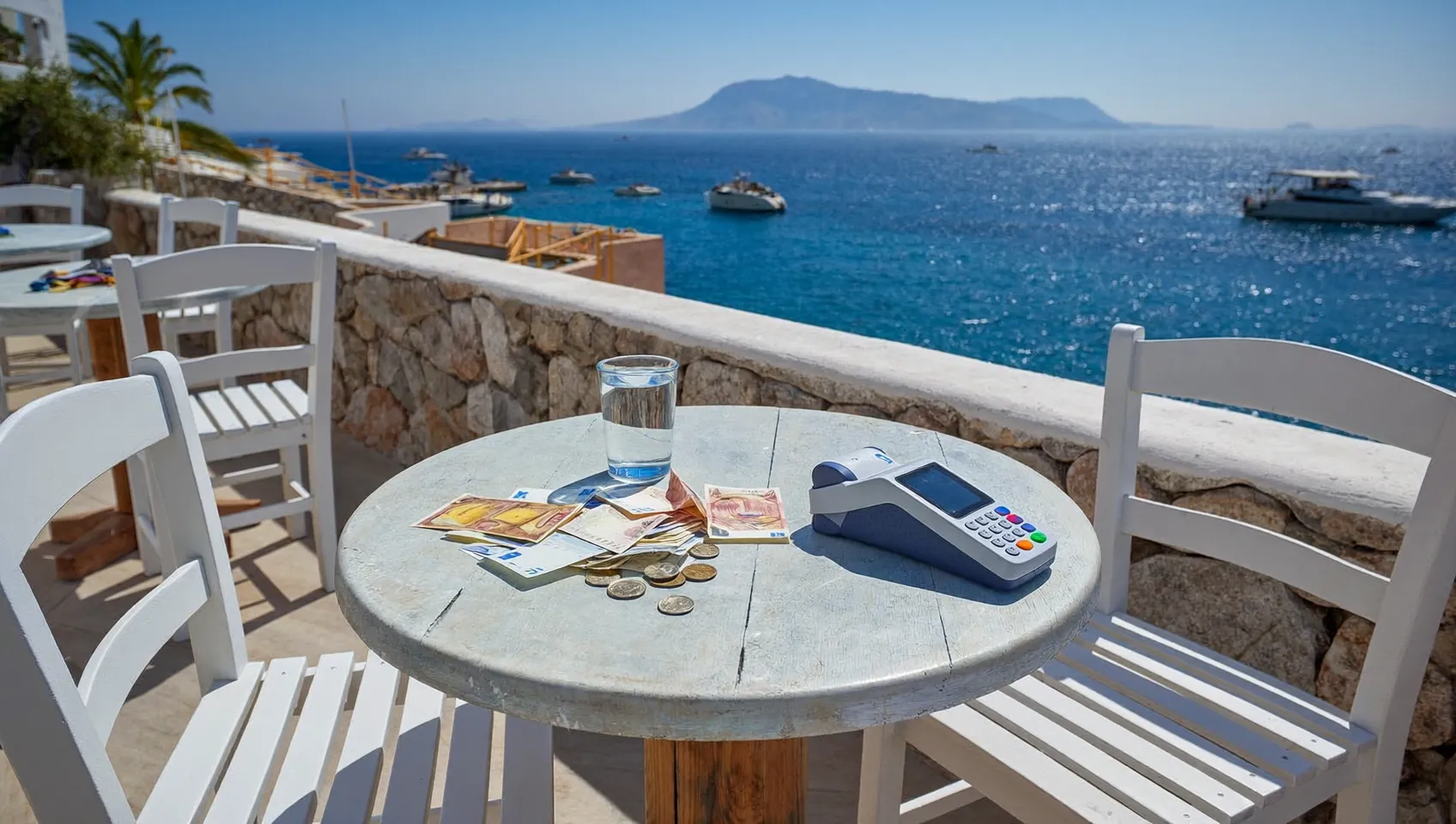
The currency in Greece is the Euro. Card acceptance varies by business; a checklist with cash Euros and an ATM card as backup is in this article.
If you're asking what the currency in Greece is, the answer is the Euro; the answer to whether credit cards are accepted is conditional: cards are accepted in many places, but some restaurants and small businesses may not accept them. Make card your primary payment method, and take cash Euros and an ATM card as backup. Details below.
In brief
- The currency in Greece is the Euro; the drachma is no longer valid, so plan your payments in Euros.
- Card acceptance varies by business; make card your primary method but keep backup cash Euros and an ATM card.
- The news about mandatory card acceptance is not from an official source; cards may still be refused on the ground.
- At the register, prefer transacting in Euros instead of Turkish lira; confirm overseas usage with your bank.
- Turkish citizens need a Schengen visa: 90 days within 180 days, 15-21 business days processing.
The core rule: The currency is the Euro
Greece's currency is the Euro. Euro banknotes and coins entered circulation in the country on 1 January 2002. The previously used drachma is no longer valid; only the Euro is currently valid. There is no point buying or accepting old drachma banknotes.
Plan to make payments in Euros. Do not expect to pay in Turkish lira for expenses such as hotels, restaurants, markets, taxis and museum entries. Before your trip, you need to prepare two things: some cash in Euros and a bank or credit card enabled for overseas use.
Turkish citizens need a Schengen visa for Greece. Verified information is as follows: the permitted stay is 90 days within 180 days, processing time is 15-21 business days, and the visa fee is €90. For application steps, see the Greece country page. Plan your payment budget together with your visa plan; keeping the visa fee separate from your travel expense budget will make things easier.
Where is credit card accepted, where is it not?
The short answer: cards can be used in many places, but don't assume they'll work everywhere. Problems usually occur at small businesses.
According to a regulatory news site, businesses in the retail and consumer services sector in Greece have been required to accept bank or credit cards and instant payments such as IRIS since 1 January 2024. This information comes from a news site, not an official source. The existence of the rule does not mean it is applied at every register.
Pegasus's travel guide, on the other hand, writes that many restaurants in Greece do not accept credit cards, and recommends bringing cash along with an ATM card. The two pieces of information should be read together: the rule may require card acceptance, but on the ground, cards may be refused at small taverns, stalls or beach kiosks; terminals or the internet may also malfunction.
Editorial recommendation: use card as your primary method, but don't rely entirely on the card working every single day. Ask at the register or at the door whether cards are accepted before eating.

Cash and ATM: What should you bring?
The type of trip you're taking determines how much cash you should bring. If you're staying at a hotel in a city centre and eating at larger restaurants, less cash is enough. The need for cash increases on small islands, in village taverns, and when using local buses or taxis.
A practical arrangement:
- Bring enough Euro cash for transportation and small expenses on the first day when you set out.
- Carry a second card with you; if one is refused or blocked at the register, the other can be used.
- Withdraw from an ATM if cash is needed; check your bank's overseas withdrawal limit and commission terms beforehand.
- Don't carry your money and cards all in one place.
When paying by card, the terminal may offer you a choice between Turkish lira or Euros. The general recommendation is to transact in Euros; before accepting an offer to convert to lira, compare the exchange rate and commission with your bank's app. For current commission and limit information, check the rule of the bank that issued your card; we do not provide figures here.
Payments on islands and tours
If you're going to the Greek islands, the need for cash may be more pronounced than in mainland cities. The tour itinerary and package scope determine which expenses you'll cover yourself; read the scope on the tour page before booking.
Rhodes
For those going to Rhodes on short tours departing from Fethiye or Marmaris, free-time expenses such as food, snacks and souvenirs are paid in Euros. For itineraries, check the scope on the Rhodes Island 2 nights 3 days tour departing from Marmaris and 4 nights 5 days tour departing from Fethiye pages.
Samos
On small islands like Samos, some taverns and cafes may prefer cash. On the Samos Island 2 nights 3 days tour, keep small amounts of Euro cash with you for daily expenses.
To see all overseas routes, you can check the overseas tours page.
Common mistakes
The most common mistakes travellers make are:
- Relying solely on card. Terminals can break down, the internet can go down, and businesses may not accept cards.
- Relying solely on cash. Carrying large amounts of cash is both risky and unnecessary.
- Not enabling the card for overseas use. Some banks may stop the first overseas transaction for security reasons; check via the app before setting out.
- Carrying only one card. If the card is lost or blocked, you'll have no other payment method left.
- Accepting a lira conversion offer without thinking. If a TL option appears at the register, check the exchange rate; transacting in Euros is usually more transparent.
- Relying on old drachma money. The drachma is not valid.
- Throwing away slips and receipts. Keep transaction receipts until the end of your trip to check the amounts deducted from your card.
For problems experienced during the visa stage, you can check the Schengen visa crisis article.
Step by step: Payment preparation before setting out
Do the following in order:
- Check your visa. Turkish citizens need a Schengen visa; processing time is 15-21 business days. For details, see the Greece page. If you travel to Schengen countries frequently, review the possibility of a long-term visa.
- Call your bank or open the app. Confirm that your card is enabled for overseas use, and verify its limit and commission terms.
- Prepare two separate payment methods. One should be a credit card, the other a bank ATM card.
- Get Euro cash. Enough to cover the first few days' expenses is sufficient; you can withdraw more from an ATM.
- Keep your card information safe. Don't leave photos of your card numbers exposed; note down the bank's emergency phone number.
- Check on travel day. Make your first payment by card at the airport or port and make sure it works.
If you're travelling by flight, also plan the online check-in process in advance; this way you can finish payment and document preparation at once.
Pre-departure checklist
Review the following list before departure:
- Schengen visa ready and stay duration suits your plan (maximum 90 days within 180 days).
- Passport and visa document with you.
- Euro cash prepared; not all kept in one place.
- Credit card enabled for overseas use; bank's emergency number saved.
- Backup second card or ATM card in your bag.
- Banking app installed on your phone; limits and notifications enabled.
- Noted which expenses are included in your tour itinerary.
- You know you'll prefer Euros if asked for TL or Euro at the register.
- If planning a short holiday, check your route; for example, October 29 holiday overseas route suggestions work with the same preparation logic.
Check the current baggage and payment rules of your airline. For current tour itineraries, see the Greece tours page.
Frequently asked questions
What is the currency in Greece?
Greece's currency is the Euro. Euro banknotes and coins entered circulation in the country on 1 January 2002. The previously used drachma is no longer valid.
Is credit card accepted in Greece?
It can be accepted in many places, but not every business accepts cards; Pegasus's travel guide writes that many restaurants do not accept cards. For this reason, it's recommended to carry cash Euros and an ATM card with you.
Is Turkish lira accepted in Greece?
Payments are made in Euros; you should not expect to pay in Turkish lira. It's enough to get some Euros before you go and use an ATM for any additional need.
Is cash needed on the Greek islands?
On small islands, in village taverns and for local transportation, cash may be needed more often. Cards can be used more comfortably in city centres. Depending on which island you're visiting, bring a small amount of cash as backup.
Should I choose TL or Euro for card payments in Greece?
If the terminal offers you a choice, transacting in Euros is usually more transparent. Before accepting a conversion offer to TL, compare your bank's exchange rate and commission. Consult your bank for current terms.
Do I need a visa to go to Greece?
Yes, Turkish citizens need a Schengen visa. The permitted stay is 90 days within 180 days. Processing time is 15-21 business days, and the visa fee is €90.
Sources
- Ülke Künyesi / T.C. Dışişleri Bakanlığı — mfa.gov.tr
- Greece and the euro - Economy and Finance - European Commission — economy-finance.ec.europa.eu
- Yunanistan Gezi Rehberi — flypgs.com
- More sectors to accept card payments and instant payment instruments in Greece from 2024 - Fiscal Solutions — fiscal-requirements.com
My Travel Team
Travel Editor
The My Travel team prepares up-to-date travel, visa and tourism information and guides.