If you encounter an earthquake or natural disaster abroad, you should first protect yourself, then follow local authorities' guidance and notify the consulate. Here are the steps and a checklist.
The answer to the question of what a tourist should do during an earthquake or natural disaster is this: first protect yourself, follow the guidance of local authorities once the danger has passed, and if you are a Turkish citizen, contact the Consular Call Center. Do not panic and run, and do not try to gather belongings. Below, the actions for the first minutes, the subsequent steps, and what to do before setting off are explained in order.
In brief
- First protect yourself; once the shaking stops, leave the building via the designated route and go to the assembly area.
- Follow the safety advice of local authorities; trust official announcements, not rumors.
- The Consular Call Center is open 7 days a week, 24 hours a day; save the phone and WhatsApp numbers in advance.
- Registering your travel dates on the e-consulate website is not mandatory, but it speeds up locating you.
- Carry your passport and ID copies in separate places.
The essence of the rule: protect yourself first, then get information
During a disaster, order matters. The first priority is your own safety: if the shaking continues, protect yourself; once the danger passes, exit your location safely. Making phone calls, packing luggage, or taking photos can wait until this stage is over.
The second step is information. When necessary, get safety advice from the local authorities of the country you are in and follow that advice. Hotel staff, a guide, or the tour operator are usually the first source of information. Do not confuse announcements from local authorities with rumors on social media.
The third step is connecting with the consulate. In extraordinary developments such as war, civil war, and natural disasters, you should follow the announcements and statements of the Ministry of Foreign Affairs. You need to send your identity and contact information to the nearest foreign mission by letter, fax, or e-mail.
This order applies to every type of disaster. Although the details may differ for earthquakes, floods, storms, or fires, the logic is the same: protect yourself, listen to local instructions, inform the mission.
During an earthquake: indoors and outdoors
Your behavior should change depending on where you are. The guidelines below are based on the guide published by AFAD for Turkey. If a local guide abroad gives different guidance, follow the instructions of the local authorities.
If you are indoors
- Crouch under a sturdy table or next to protective furniture.
- Protect your head with both hands or with a pillow or book.
- Stay in this position until the shaking stops.
If you are in a hotel room, choose a spot next to the bed, away from windows and cabinets that could topple over. Do not head for the stairs or the elevator during the shaking.
If you are outdoors
- Move away from power lines and poles.
- Stay away from trees, other buildings, and the base of walls.
- Look for open, solid ground and wait there.
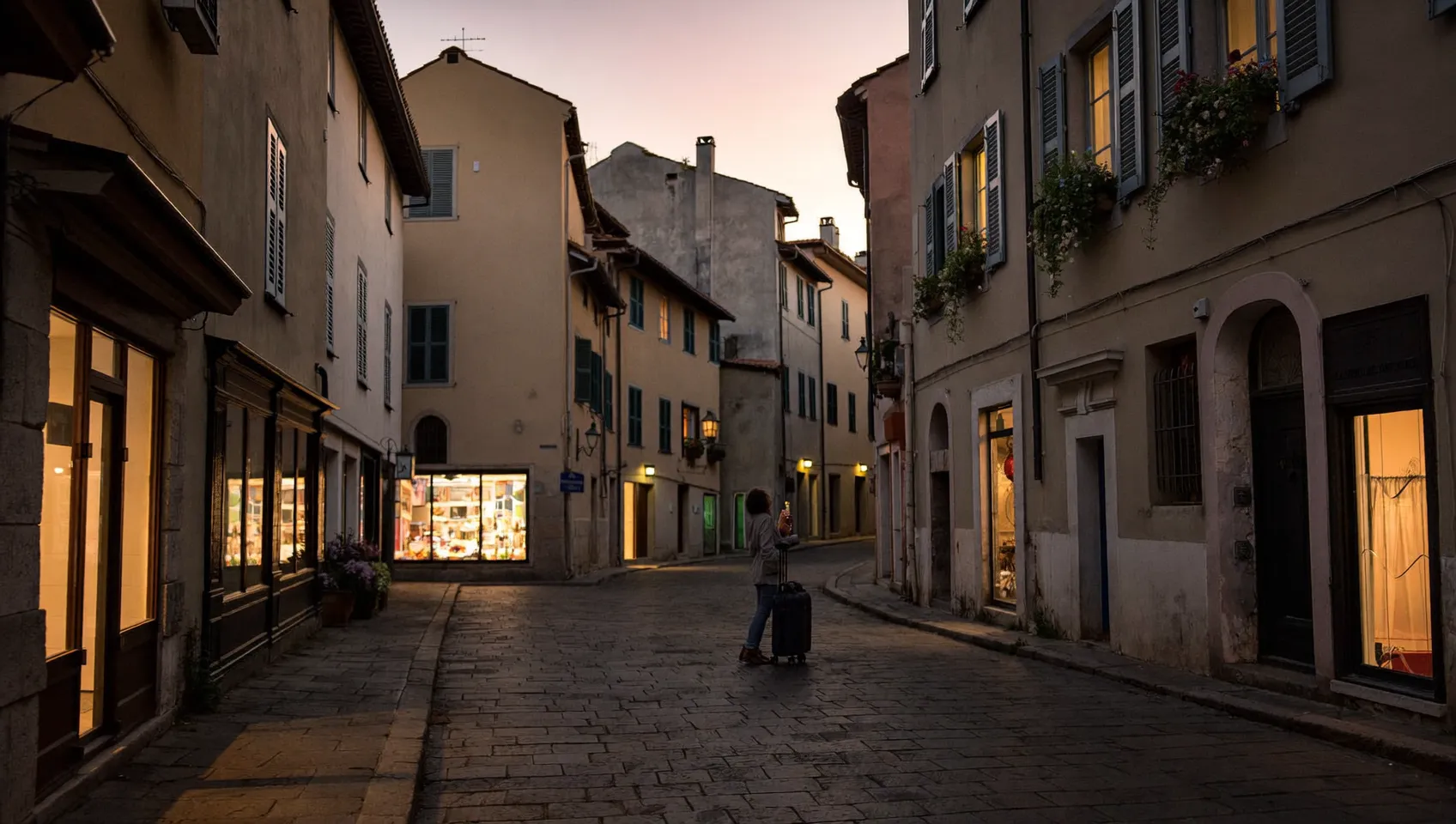
In narrow streets, facade plaster, signs, and balcony pieces may fall. If you are in a city center, the nearest square or park is a good choice. If you are at the coast, be sure to check whether local authorities have issued a tsunami or wave warning.
What to do after the shaking stops
When the shaking stops, do not rush, but do not dawdle either. According to AFAD's guide, turn off electricity, gas, and water valves, and extinguish stoves and heaters. At a hotel, staff handle this; instead of touching the valves yourself, notify the staff.
Leave the building via the predetermined route and go to the assembly area. In hotels, the emergency exit plan is usually posted behind the room door or in the hallway. Reading this plan once at check-in can save minutes during a disaster.
At the assembly point, do the following:
- Check the health of those around you; if there are injured people, notify the local emergency services and staff.
- Do not tie up the phone with unnecessary calls; text messages and data connections put less strain on the lines.
- Due to the possibility of aftershocks, do not enter a damaged building unless permitted.
- If your passport and medications are with you, keep them on you.
Permission from local authorities is required to return to the building. Even if the hotel says it is "safe," wait for the official announcement.
How a Turkish citizen can reach the consulate
In extraordinary and urgent situations outside working hours or on holidays, the Ministry of Foreign Affairs Consular Call Center, which operates 7 days a week, 24 hours a day, can be reached at 0090-312-2922929. The same center can also be reached via WhatsApp at +90 312 292 29 29. If the lines are busy, a written message is often easier to deliver.
The Ministry of Foreign Affairs' "Overseas Emergency Notification" module has been made available through e-Devlet (announcement date 21.05.2026). Applications and notifications made through the module can be forwarded to the relevant Embassy.
Registering before your trip can also speed things up. To enable quick location of you in the event of life-threatening incidents such as natural disasters anywhere in the world, you can register your departure and return dates along with the country and city you are visiting on the e-consulate website. Consular protection continues to be provided to those who do not register; registration is not mandatory, it simply makes it easier to find your location.
If security conditions require it, necessary measures are taken for the evacuation of Turkish citizens from the country. Since evacuation details vary by event, follow the announcements.
Common mistakes and exceptions
In disasters, the behaviors that cause the most harm are often unconscious reflexes.
- Running outside during the shaking: Falling debris on stairs and at exits poses a danger. Protect yourself first, and exit once the shaking stops.
- Using the elevator: Power may be cut, and you could get trapped.
- Carrying documents together: Keep your passport stored safely. Carry an identity-proving document such as a copy of your passport, ID card, or driver's license, and do not carry all your documents together. For your driver's license, you can check the international driver's license guide.
- Not notifying the consulate: Also report that you are safe and sound, so your family and officials do not worry.
- Following rumors instead of local instructions: Do not trust advice that contradicts official warnings.
Exceptions
AFAD's guidelines are prepared for Turkey. Other countries may have different practices or evacuation procedures. For disasters such as floods, hurricanes, volcanoes, and wildfires, the earthquake steps in this article do not apply exactly; the guidance of the relevant country's authorities takes priority. Also check your airline's current cancellation and change policy.
Checklist before setting off
Preparation is your only real advantage during a disaster. Before you leave, do the following:
- Register your departure and return dates and the city you are visiting on the e-consulate website.
- Save the Consular Call Center phone and WhatsApp numbers in your contacts.
- Carry a copy of your passport and ID document separately from the originals.
- Read your travel health and cancellation insurance policy to see its disaster coverage.
- Review the emergency exit plan of the hotel you'll be staying at upon arrival, and walk the exit route once.
- Keep your phone charged, and carry a spare battery with you.
- Keep any medications you regularly use in your carry-on bag.
- Inform your loved ones of your address and route.
If you are planning a group trip, ask the guide and operator in advance about their emergency procedure on organized international tours. If a route change is necessary due to a visa or entry issue, see the steps to take after a visa refusal. Follow the announcements of the Ministry of Foreign Affairs throughout your trip.
Frequently asked questions
What should I do first if there is an earthquake abroad?
If you are indoors, crouch under a sturdy table or next to protective furniture and protect your head. Stay in this position until the shaking stops. Then leave the building via the designated route and go to the assembly area.
Where should I go if I'm outdoors during an earthquake?
Move away from power lines and poles, trees, other buildings, and the base of walls. Wait on open, solid ground. If you are at the coast, also follow the warnings of local authorities.
How do I reach the consulate during a disaster?
The Ministry of Foreign Affairs Consular Call Center operates 7 days a week, 24 hours a day; it can be reached at 0090-312-2922929. It can also be reached via WhatsApp at +90 312 292 29 29. If the lines are busy, try a written message.
Is it mandatory to register my travel information in advance?
No, it is not mandatory. However, registering your departure and return dates along with the country and city you are visiting on the e-consulate website helps your location be found quickly in a disaster. Consular protection continues to be provided to those who do not register.
What is the Overseas Emergency Notification?
It is a module made available by the Ministry of Foreign Affairs through e-Devlet; the announcement date is 21.05.2026. Applications and notifications made through the module can be forwarded to the relevant Embassy.
What happens if I lose my passport during a disaster?
This is why it's recommended to carry copies of your passport and ID separately from the originals. The copies help prove your identity. Apply to the nearest foreign mission for detailed processing.
Will I be evacuated from the country in a natural disaster?
If situations such as natural disasters arise and security conditions require it, necessary measures are taken for the evacuation of Turkish citizens from the country. The decision varies by event; follow the Ministry's announcements.
Sources
- T.C. Dışişleri Bakanlığı - Consulate General Of The Republic Of Turkey - Info Notes — sanghay.bk.mfa.gov.tr
- Consular Guide for Those Traveling Abroad / Republic of Türkiye Ministry of Foreign Affairs — mfa.gov.tr
- T.C. Dışişleri Bakanlığı - Kotonu Büyükelçiliği - Bilgi Notları — kotonu-be.mfa.gov.tr
- T.C. Dışişleri Bakanlığı - Turkish Embassy In Tokyo - Announcements — tokyo-be.mfa.gov.tr
- Attention to Citizens Traveling Abroad / Republic of Türkiye Ministry of Foreign Affairs — mfa.gov.tr
- Republic of Türkiye Ministry of Interior Disaster and Emergency Management Authority - Earthquake — afad.gov.tr
My Travel Team
Travel Editor
The My Travel team prepares up-to-date travel, visa and tourism information and guides.