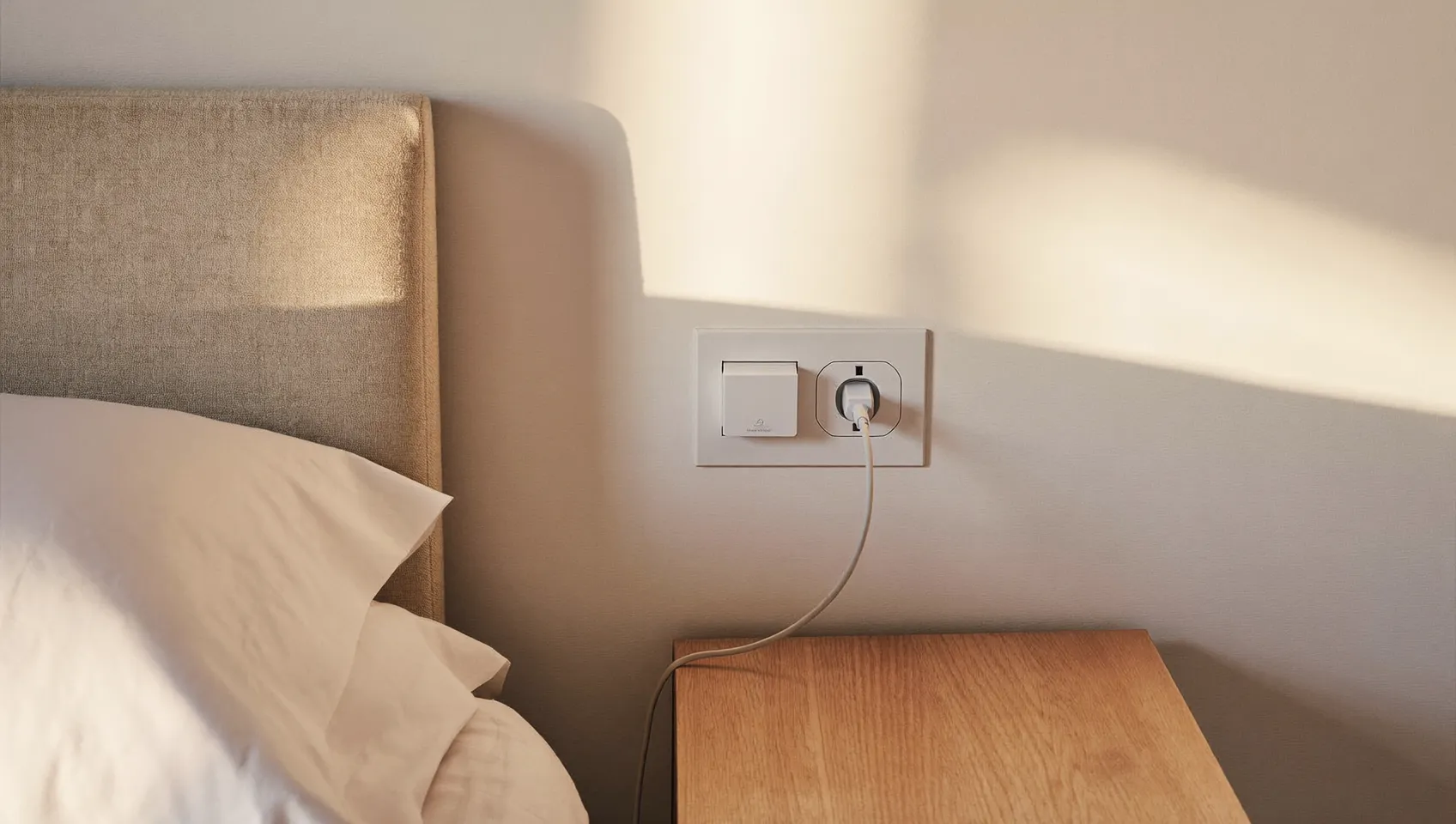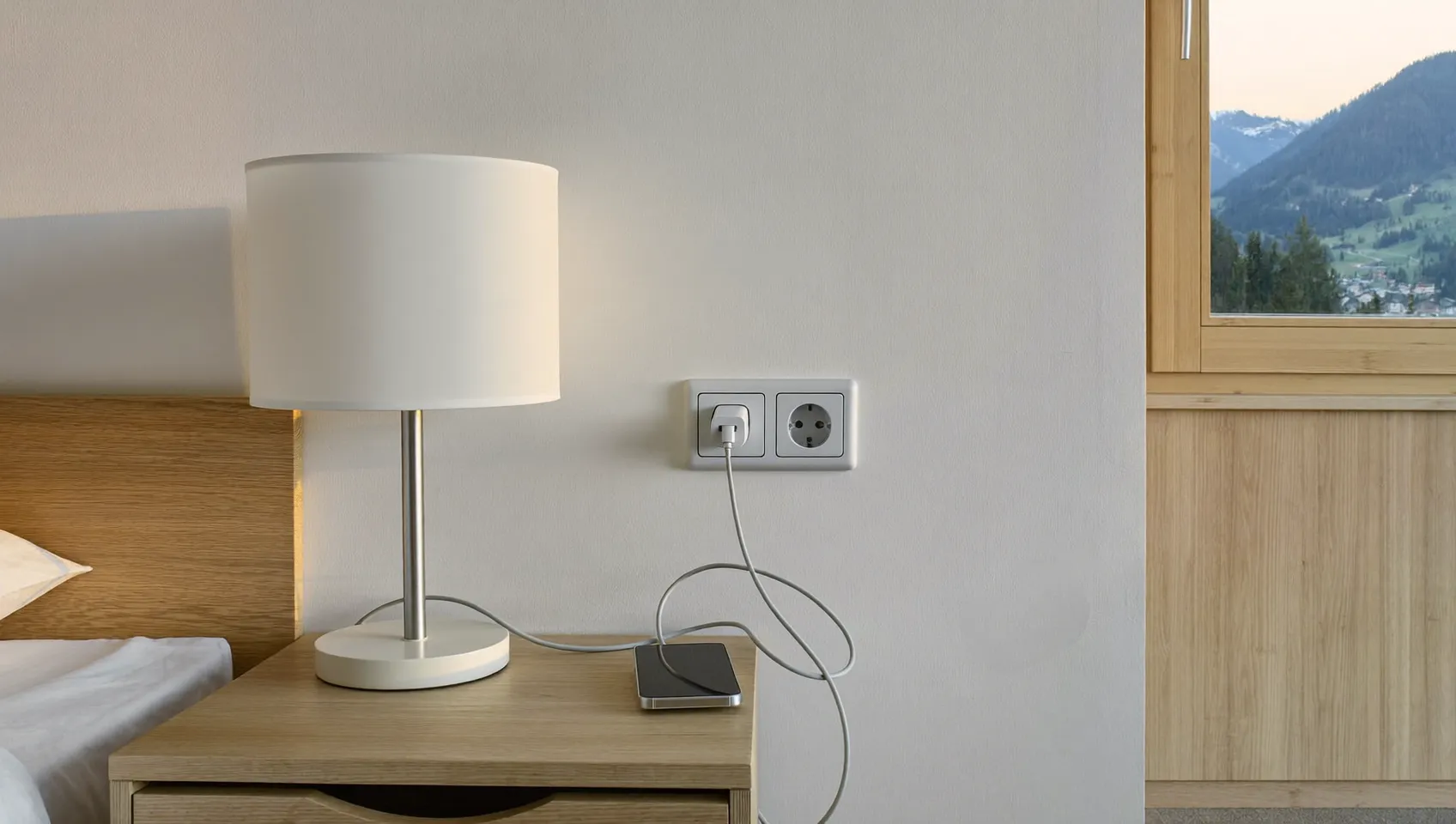
Outlet type and voltage vary from country to country. Here's a summary of the difference between an adapter and a converter, outlet types by country, and checks to make before you travel.
Do you need a universal plug adapter? Most of the time, yes: if the outlet type or voltage in your destination country differs from Turkey's, you may need an adapter, a converter, or both. An adapter only matches the plug shape — it does not change the voltage. In this article you'll find outlet types by country, how to check voltage from the device label, and the steps to take before you travel.
In short
- An adapter matches the plug; it does not change the voltage. If there's a voltage difference, you may also need a converter.
- Before deciding, read the input voltage range on your charger's label.
- In Taiwan and Colombia the mains supply is 110V; be especially careful with heating appliances.
- Keep adapters and chargers in your carry-on bag, not in checked luggage.
The core rule: an adapter and a converter are not the same thing
Before using a charger abroad, answer two separate questions: does the plug fit the outlet, and does the mains voltage suit your device?
- Adapter: Matches the shape of the plug to the outlet. It does not change the voltage of the electricity.
- Converter (voltage converter): Lowers or raises the mains voltage to a value the device can operate on.
If the voltage and outlet type in your destination country differ from Turkey's, you may need an adapter, a converter, or both. Which one you need depends on two things: the country's outlet type and the voltage range your device supports.
Products sold as a "universal adapter" usually combine several plug types in one body. This solves the plug problem, but it often does not convert voltage. Unless the box or the product itself clearly states a converter function, assume it is an adapter only.
Most chargers for phones, tablets, laptops and cameras are made to work across a wide voltage range. Heating appliances such as hair dryers, straighteners and kettles, however, are more sensitive to voltage. That's why the real risk usually lies with this second group.
Outlet type and voltage by country
The values below are for the countries verified in this guide:
- Germany: 230V, 50Hz; outlet types C / F.
- Azerbaijan: 220V, 50Hz; outlet types C / F.
- Switzerland: 230V, 50Hz; outlet types C / J.
- Australia: 230V, 50Hz; outlet type I.
- China: 220V, 50Hz; outlet types A / I.
- Taiwan: 110V, 60Hz; outlet types A / B.
- Colombia: 110V, 60Hz; outlet types A / B.
You can draw two conclusions from this list. First, even countries with the same voltage may use different outlet types: Australia and Germany share the same voltage but have different outlet types. Second, in 110V countries like Taiwan and Colombia, an adapter alone may not be enough; you need to check your device's voltage support.
In Switzerland, both types C and J are used. In China, types A and I are seen together. In a country with more than one outlet type, you may encounter different sockets depending on the hotel or building's age, so a multi-plug adapter makes things easier.
For a country not on this list, confirm the outlet type and voltage from a reliable source before you travel.
Voltage difference: what happens in 110V countries?
Even if the plug fits, a voltage mismatch can damage the device. This risk arises in countries whose mains supply is noticeably lower or higher than Turkey's. In Taiwan and Colombia the mains supply is 110V 60Hz; in Germany, Switzerland and Australia it is 230V; in China and Azerbaijan it is 220V.
Check the label on your device's charger. The "Input" line shows a range. If the range covers both the low and high voltage, the device will work on both mains supplies, and a plug adapter alone will suffice. If the label shows only a single value, you'll need a converter for a mains supply different from that value.
Frequency difference
Mains frequency can be 50Hz or 60Hz. Modern chargers usually don't mind this. In devices with motors or timers, however, the difference can affect operating speed. If you're not sure, check the device's user manual.
Heating appliances
In high-power devices like hair dryers, a voltage mismatch is riskier. Instead of bringing these devices with you, it's safer to ask the hotel in advance whether one is provided.
Exceptions and common mistakes
The most common mistake travelers make is assuming the "universal" label means voltage protection. A multi-plug adapter matches the plug but does not protect the device from high voltage.
- Packing the adapter in checked luggage: You could end up without a charger or adapter on arrival day. Carry these in your cabin bag in case of baggage delay. If you do run into a baggage issue, reading about what to do for lost luggage beforehand will speed things up.
- Charging too many devices from one adapter: Connecting multiple multi-sockets to the same adapter can cause overheating.
- Assuming a single outlet type per country: Many countries have two different types; your hotel room may have something other than what you expected.
- Buying a cheap, uncertified adapter: Don't use an adapter that fits loosely or gets hot.
- Forgetting a power bank: You may not have access to an outlet on a long journey; check your airline's current rules for power banks.
As an exception, if you're only carrying a phone and a laptop and their charger labels show a wide voltage range, you won't need to buy a converter.
Step by step: which equipment should you get?
Follow these steps before you set off:
- Write down the countries on your route. If you're visiting more than one country, note the outlet type and voltage for each. If you're planning a multi-stop trip, for example, list the cities as in the places to visit in Austria guide and create a needs list by country.
- List your devices. Phone, tablet, laptop, camera, shaver, hair dryer.
- Read the charger labels. Check the voltage range on the "Input" line.
- Decide. If the range is wide, an adapter alone is enough; if it's narrow and you're heading to a country with different voltage, you'll need a converter.
- Choose a multi-plug adapter. Make sure it covers all the outlet types on your route.
- Test it at home. Plug your charger into the adapter and check that it works.
- Pack it in your carry-on. So you don't face a charging problem on your first night on arrival.
If you're taking an organized trip, you can check the international tours page to review countries by route and determine in advance which outlet types you need to prepare for. Asking in advance whether the hotel provides an adapter is another option.
Checklist before you set off
Before closing your bag, check off these items:
- I've noted the outlet type and mains voltage for every country I'm visiting.
- I've checked the voltage range on every device's charger label.
- My multi-plug adapter covers all the outlet types on my route.
- I've bought a converter for devices with mismatched voltage, or decided not to bring them.
- I've tested the adapter at home; the charger sits securely.
- The adapter and chargers are in my carry-on bag.
- I've checked my airline's current rules for power banks.
- I've packed a spare charging cable.
- My payment and cash plan for the destination country is ready; for example, I checked the currency and card usage guide for Egypt.
If you've completed this checklist, you don't need any further preparation regarding outlets. If there's a country or device you're unsure about, base your decision on the voltage label and the country's verified mains information — don't rely on guesswork.
Frequently asked questions
Does a universal plug adapter work in every country?
As long as it covers the plug types, it will fit the outlet, but whether it works safely in every country also depends on voltage. An adapter does not change the voltage. If your device's label voltage range doesn't cover your destination country, you'll need a converter.
Do I need an adapter for Germany?
In Germany the mains supply is 230V 50Hz and the outlet types are C / F. If your plug doesn't match these types, you'll need an adapter. If your device's charger label shows 230V, you won't need a converter.
Do I need a converter in Taiwan and Colombia?
In both countries the mains supply is 110V 60Hz and the outlet types are A / B. If your device's input range doesn't cover this voltage, you'll need a converter. Phone and laptop chargers mostly have a wide range — confirm it from the label.
What's the difference between an adapter and a converter?
An adapter only matches the shape of the plug to the outlet. A converter changes the mains voltage to a value the device can run on. If there's a voltage difference, an adapter alone won't be enough.
Should I bring my hair dryer abroad?
Heating appliances are sensitive to voltage and can be damaged by a mismatch. If the voltage in your destination doesn't match your device's label, don't bring it. It's more practical to ask in advance whether the hotel provides a hair dryer.
Should I pack the adapter in my cabin bag?
Yes, carrying it in your carry-on is safer. If your checked luggage is delayed, you can still charge your phone on arrival day. If you're carrying a power bank, check your airline's current rules.
Which outlet type is used in China?
In China the mains supply is 220V 50Hz and the outlet types are A / I. So it makes sense to carry a multi-plug adapter. Also check whether your device's label supports 220V.
Sources
- Plug and Outlet Guide — flypgs.com
- World plugs — iec.ch
My Travel Team
Travel Editor
The My Travel team prepares up-to-date travel, visa and tourism information and guides.