Calculate your travel budget item by item using the daily spending, flight and extra buffer formula; includes the cash limit and a checklist.
How do you plan a travel budget? Multiply your daily spending by the number of days, add the flight ticket, and put an extra buffer of around 15% on top. Daily spending consists of accommodation, food, transport and activity costs. On this page you'll find the formula, the budget items, the cash-carrying limit, common mistakes and a checklist to use before you set off.
In brief
- Formula: (daily budget × number of days) + flight + an extra buffer of around 15%.
- Daily budget consists of four items: accommodation, food, transport, activities.
- Make shopping a separate line; the blog recommendation is 10-15% of the total budget.
- Customs declaration is mandatory for amounts over 10,000 Euros or its equivalent in cash foreign currency.
- Add visa, transfer and exchange-rate risk to the budget from the start; confirm the cash rule for travellers under 18.
The budget formula: the calculation in one line
The calculation rests on a single formula: Total = (daily budget × number of days) + flight + around 15% extra. Daily budget is the sum of accommodation, food, transport and activity costs. The flight ticket is not part of the daily calculation; it is added separately. The extra buffer is a safety margin added on top of the whole total.
For the formula to work, estimate each item separately. Instead of saying "I spend this much per day", write accommodation, food, local transport and ticketed activities on separate lines. This way you can see which item you can cut back on and which one would spoil the trip if cut.
This article does not give prices; costs vary by country, season and comfort level. Gather the figures yourself from current hotel, ticket and entrance fees. The 15% rate is not an official rule; it is a buffer suggestion used in travel blogs. However, the structure of the formula stays the same for every route.
Daily budget: four basic items
Build the daily budget from four items. For each item, first look at a real example from your route: the nightly rate of a hotel in the city you're going to, the average cost of a meal, and the airport-to-city and local transport fares.
- Accommodation: Multiply the nightly rate by the number of nights. Check whether items like city tax or cleaning fee are listed separately on the booking page.
- Food: If you chose a hotel that includes breakfast, reduce the number of meals. Decide whether you'll eat at restaurants or opt for supermarket and street food.
- Transport: Airport transfer, metro and tram card, intercity tickets. If you'll be taking taxis, calculate this separately.
- Activities: Museum entries, tours, shows. Identify the three or four places you want to visit and find out the entrance fees in advance.
The sum of these four items is your daily budget. When you multiply it by the number of days, you get the cost of the trip excluding the flight. If the route includes more than one city, work out a separate daily budget for each city and add them up; squeezing an expensive city and a cheap city into the same average will throw off the calculation.
Extra buffer and emergency fund
The extra buffer in the formula covers unplanned expenses. Sources suggest different rates for this buffer: 10-20% for unexpected expenses, and at least 15% or 20% of the travel budget for an emergency fund. These are blog-sourced recommendations, not an official norm. Our editorial advice: if you are travelling abroad for the first time or the route is complex, choose the higher end of the range.
It's also important to know what you're setting the extra buffer aside for:
- An extra night's accommodation due to a missed connection
- A changed transfer because of weather conditions
- Pharmacy, health or phone expenses
- Replacing a lost item
Do not treat this buffer as money to be spent. Whatever is left over at the end of the trip is yours to keep. If you dip into this fund to buy souvenirs during the trip, it loses its actual purpose; plan a separate allowance for that.
Shopping allowance and duty free
For shopping and souvenirs, 10-15% of the total budget is recommended; this too is a blog-sourced suggestion. Write this allowance as a separate line and subtract it from the daily budget. Otherwise you'll spend a little extra each day and exceed the budget without noticing.
When determining your shopping allowance, ask these questions:
- Who am I buying gifts for and how many people are there?
- Do I have room and weight allowance in my suitcase?
- Will the product I buy cause problems at customs on the way back?
For the last question, read in advance about whether products bought at duty free cause problems at customs. Learning the return rules before budgeting for items like an expensive electronic device or a large quantity of alcohol prevents loss of both money and time. Writing your gift list before you go also reduces the rushed, expensive shopping done at the airport.
Cash, card and exchange-rate loss
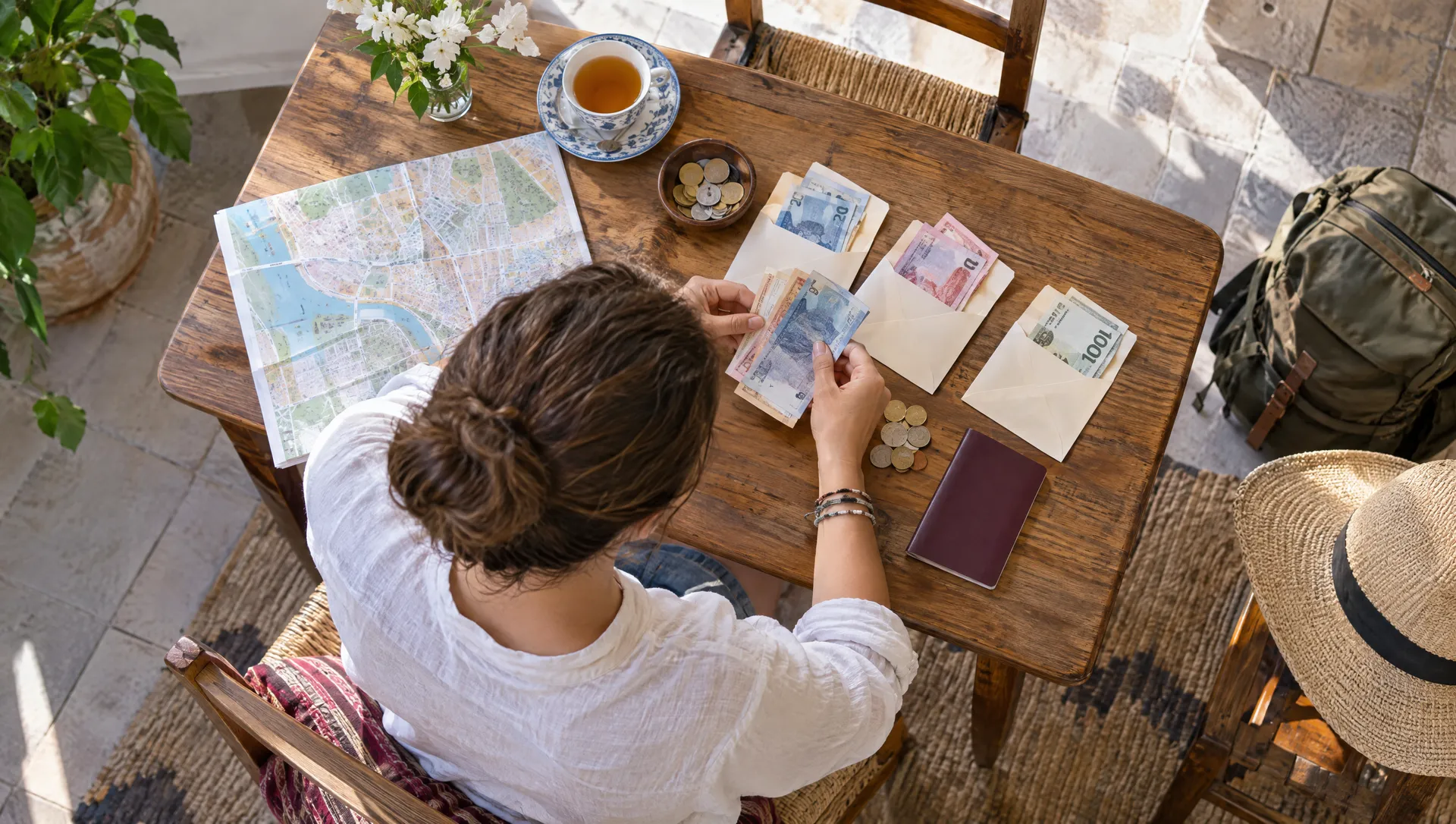
After preparing the budget, decide how much will be spent in cash and how much by card. When determining the cash share, know the legal limit: a traveller wishing to take over 10,000 Euros or its equivalent in cash foreign currency out of the country is required to make a declaration to the customs officer. In other words, declaration is only required for cash exceeding this amount.
According to the Ministry of Trade, the undeclared cash export limit (10,000 Euros) applies to persons aged 18 and over. We were unable to confirm the practice for travellers under 18 on this page; if you are travelling with a child, confirm with the customs administration or the Ministry of Trade's current announcements before carrying cash. Most individual trip budgets stay well below this limit; still, check the total cash amount for group or long-term trips.
Our editorial recommendations to reduce exchange-rate loss:
- Don't exchange all your money in one place at one time.
- When paying by card, choose which currency it will be charged in; paying in the local currency is often more advantageous.
- Find out your bank's foreign transaction commission and limits before you go.
- Research how widely cards are accepted in the country; for example, the guide on currency and credit card use in Dubai answers this question for that specific route.
We don't give commission and exchange-rate-difference figures, as they vary by bank; check your bank's current rate schedule.
Common mistakes
The following mistakes are most commonly seen when preparing a budget:
- Forgetting transport other than the flight. If airport transfers and intercity transitions aren't included in the daily budget, they become a surprise at the end of the trip.
- Leaving out visa expenses. Application fees, appointment and document costs are part of the total budget. Keeping in mind that this expense may not be refunded in case of rejection, review visa rejection data and prepare your application thoroughly.
- Skipping the extra buffer. A budget built without an extra buffer collapses at the first mishap.
- Miscounting the number of days. Don't confuse the number of nights with the number of days. Decide for yourself, based on flight times, whether to count arrival and departure days as full or partial days; this is not a rule but a planning choice.
- Assuming a fixed exchange rate. The rate may change between the day you do the calculation and the day you travel. Keep the buffer a bit higher to account for exchange-rate risk.
- Burying the shopping allowance in the daily budget. Souvenirs look small one by one, but add up in total.
The remedy for every mistake is the same: write the item on a visible line.
Step-by-step budget preparation and checklist
Prepare the budget in this order:
- Fix the route and the number of days.
- Add up the flight ticket and visa expenses.
- Write down accommodation, food, transport and activity items for each city you'll visit; work out the daily budget.
- Multiply the daily budget by the number of days, add the flight.
- Add the extra buffer on top of the total.
- Determine the shopping allowance separately.
- Plan the cash and card split.
If you choose a tour, the calculation becomes easier, because accommodation, transfers and some activities are included in the package. Read line by line what is included and excluded in tours abroad, and add the excluded items to your daily budget.
Checklist before you set off:
- Formula completed, extra buffer added
- Visa and insurance costs included in the total
- Cash amount does not exceed the 10,000-Euro-or-equivalent limit, or declaration has been planned
- If travelling with a passenger under 18, the cash rule has been confirmed with customs
- Bank card enabled for use abroad, limit sufficient
- Shopping allowance set aside, customs rules read
- If travelling with a child, additional costs from the documents and items list for travelling with a baby have been calculated
Frequently asked questions
How is a travel budget calculated?
The total budget is found with this formula: daily budget times number of days, plus flight ticket, plus an extra buffer of around 15%. Daily budget is the sum of accommodation, food, transport and activity costs. It's also good to add a separate allowance for shopping.
How much extra buffer should be added to a travel budget?
Sources suggest rates such as 10-20% for unexpected expenses and at least 15% or 20% for an emergency fund. These are not official rules but blog suggestions. If you're travelling abroad for the first time, it makes sense to choose a buffer closer to the upper end.
How much of the budget should be set aside for shopping?
For shopping and souvenirs, 10-15% of the total budget is recommended. Keeping this allowance separate from the daily budget makes it easier to control spending. Also learn the customs rules for the products you plan to buy in advance.
How much cash can I take abroad?
A traveller wishing to take over 10,000 Euros or its equivalent in cash foreign currency must make a declaration to the customs officer. The undeclared limit applies to persons aged 18 and over; for those under 18, get confirmation from customs. Most trip budgets stay below this limit.
Is visa expense included in the travel budget?
Yes, visa application fees, appointment and document costs are part of the total budget. Check the current fees from the relevant consulate's or application center's page. Record this item as a fixed expense along with the flight ticket.
Does buying a tour make budget preparation easier?
Yes, because accommodation, transfers and some activities may be included in the package price. Still, you need to add to your daily budget the meals, free time and shopping expenses not covered by the tour. Read the itinerary line by line and note what isn't included.
Sources
- T.C. Ministry of Trade — ticaret.gov.tr
- How to Make a Budget Plan for Travelers on a World Tour? — uption.com.tr
- How Is a Travel Budget Calculated? Practical Guide 2025 — ucuzagezin.com
My Travel Team
Travel Editor
The My Travel team prepares up-to-date travel, visa and tourism information and guides.