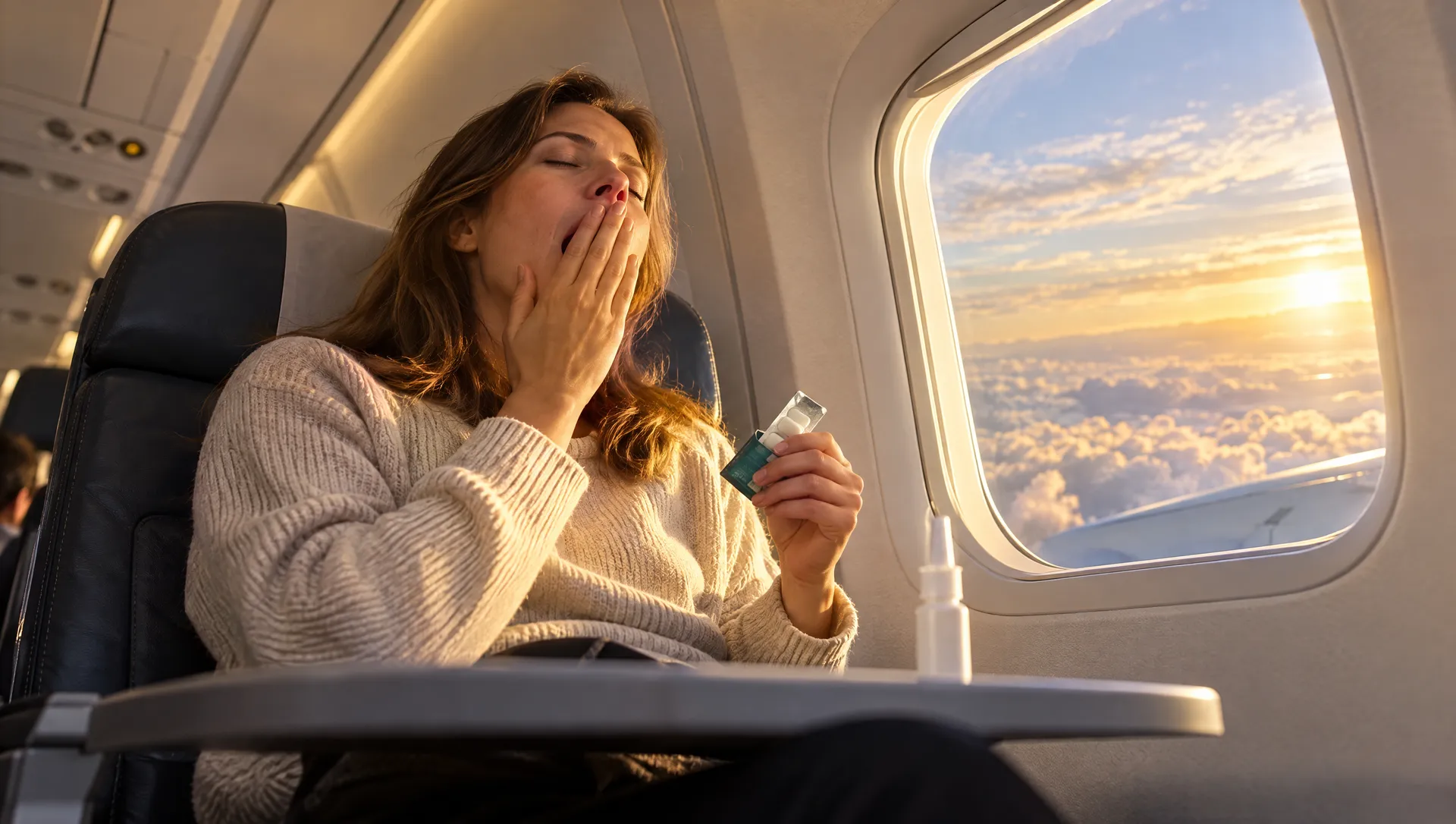
Why does ear blockage occur on flights during takeoff and landing, what can you do at home and in the cabin, and with which symptoms should you see a doctor; a short and practical guide.
Ear blockage on flights usually resolves on its own; yawning, swallowing, or chewing gum relieves symptoms for most passengers. If you have nasal congestion, consult your doctor or pharmacist before the flight. Severe pain or bleeding from the ear is a different matter and may require medical attention. This page summarizes what to do during takeoff and landing.
In short
- Mild ear blockage usually resolves on its own; yawning, swallowing, and chewing gum are the first steps.
- If you're going to use a decongestant, take it 30 minutes before the flight and consult a doctor or pharmacist first.
- Don't sleep during takeoff and landing; avoid sudden maneuvers that strain the pressure.
- If there is severe pain or bleeding from the ear, seek medical help.
The essence of the rule: it usually resolves on its own
Ear blockage on flights occurs because the pressure in the middle ear cannot immediately balance with the outside pressure as cabin pressure changes. This balance is achieved via the eustachian tube. When the tube opens, the pressure equalizes and the feeling of blockage goes away.
There are three things you should know:
- Self-performed steps like yawning, swallowing, or chewing gum usually improve symptoms.
- The blockage usually resolves on its own; a decongestant (nasal congestion reliever) can be used to relieve the pressure.
- Severe pain and bleeding from the ear are not considered ordinary blockage; in such cases medical help may be needed.
So the answer is conditional: with mild blockage there is usually no need to worry, but if symptoms worsen, don't wait. The advice of a doctor or pharmacist who knows your personal condition takes precedence over general information when it comes to medication use.
What to do during takeoff and landing?
Pressure change is most noticeable during takeoff and landing. That's why precautions focus on these two stages.
Takeoff
Swallowing and yawning occasionally during takeoff may be enough. Chewing gum is a practical method since it naturally increases swallowing. Put your gum or candy in the most accessible part of your bag before takeoff.
Landing
Ear blockage during landing is often more uncomfortable. Start yawning and swallowing before the descent begins; don't wait until the blockage occurs. It's recommended not to sleep during takeoff and landing, because swallowing frequency decreases during sleep and you can't consciously perform the movements that balance the pressure.
If you're asleep when the landing announcement is made, you can ask the cabin crew in advance to wake you up. This way you'll be prepared when the descent begins.
Flying with a cold and nasal congestion
Nasal and throat congestion can make it harder for the eustachian tube to open. Passengers with a cold, allergies, or sinus complaints therefore have a higher likelihood of experiencing ear blockage on flights.
The generally known approach is as follows:
- A decongestant can be used to relieve the pressure.
- It's recommended to take decongestant medication 30 minutes before the flight; calculate this time backward from the flight time.
- Ask a doctor or pharmacist whether the medication is suitable for you, especially if you have a chronic illness, blood pressure issues, or take regular medication.
The type and use of medication for children is a separate matter that should be discussed with a doctor; don't give medication on your own decision. If your complaint is clearly severe, consider whether it's possible to postpone the flight by checking your ticket's conditions. Change and cancellation rules vary by airline; check your airline's current policy.
Common mistakes
Actions taken in panic during ear blockage can worsen the problem. The most common mistakes are:
- Applying pressure forcefully. Pressure-equalizing movements should be done gently; the ear should not be strained. Avoid a very forceful pressure maneuver that would strain the eardrum.
- Acting only after the descent has begun. Relieving a blockage after it has formed is harder than preventing it beforehand.
- Sleeping during takeoff and landing. Swallowing decreases, and the pressure remains unbalanced.
- Taking medication at the last minute. It's recommended to take decongestant medication 30 minutes before the flight; taking it at the gate or on the plane means it's too late.
- Ignoring the pain. Mild blockage can be expected, but severe pain and bleeding from the ear should not be.
In particular, don't resort to harsh methods like pinching your nose and blowing forcefully. If gentle movements don't bring results, see a doctor after the flight instead of insisting on your own.
When should you see a doctor?
Ordinary blockage usually resolves on its own after landing. Medical help may be needed in the following situations:
- Severe ear pain
- Bleeding from the ear
- Noticeable blockage or hearing loss that continues after the flight has ended
Bleeding and severe pain are clearly listed among the symptoms that may require medical attention. In this case, go to the nearest healthcare facility instead of trying medication on your own or waiting.
Consulting a doctor before the flight
If you have a severe cold, an ear infection, or have experienced severe ear pain on a flight before, consult your doctor before buying a ticket or flying. If you're abroad, it's also a good idea to review your health insurance coverage before traveling; the general preparation logic in the article What to know before traveling to Azerbaijan can also guide you in preparing for your destination country.
Step by step: before, during, and after the flight
Apply the plan in three stages.
Before the flight
- If you have nasal congestion, consult your doctor or pharmacist.
- If deemed appropriate, take the decongestant 30 minutes before the flight.
- Put gum or candy in your hand luggage.
- If possible, schedule your flight time for when you'll be well-rested; you can use the search for flight tickets page to compare flights.
During the flight
- Swallow, yawn, or chew gum during takeoff.
- Don't sleep during takeoff and landing.
- Start the same movements again before the descent begins.
- Perform pressure movements gently; don't force them.
After the flight
- Monitor whether the blockage resolves; it usually resolves on its own.
- If there is severe pain or bleeding from the ear, get medical help.
- Tell a doctor about a complaint that doesn't go away.
Checklist before you set off
Review these items before closing your bag:
- Do I have nasal congestion, a cold, or an ear complaint? If so, have I consulted a doctor?
- If I'm going to use a decongestant, have I timed it to take it 30 minutes before the flight?
- Is gum or candy in my hand luggage, within easy reach?
- Have I made a plan to avoid sleeping during takeoff and landing?
- Do I know to avoid harsh movements that strain my ear?
- Do I know what to do if there's severe pain or bleeding from the ear?
- Do I have a note from a doctor regarding medications I take regularly?
If you're flying with a child, don't forget the documentation side in addition to health preparation; you can find the rule in the article Is a consent letter required when traveling abroad with a child. Check your airline's current policy for ticket changes and medical condition rules.
Frequently asked questions
Does ear blockage on flights resolve on its own?
It usually does. Steps like yawning, swallowing, or chewing gum usually improve symptoms. If there is severe pain or bleeding from the ear, medical help may be needed.
What should be done to prevent ear blockage on flights?
Swallow, yawn, or chew gum during takeoff and landing. It's recommended not to sleep during takeoff and landing. If your nose is congested, you may consider using a decongestant after consulting your doctor.
How long before the flight should decongestant medication be taken?
It's recommended to take decongestant medication 30 minutes before the flight. Still, the choice and dose of medication vary by person. Consult your doctor or pharmacist.
Is it correct to pinch your nose and blow to relieve ear blockage on flights?
Pressure-equalizing movements should be performed gently. Avoid a very forceful pressure maneuver that would strain the eardrum. If gentle movements don't work, see a doctor.
When should you see a doctor for ear blockage on flights?
If there is severe ear pain or bleeding from the ear, medical help may be needed. It's also advisable to see a doctor if the blockage doesn't resolve after the flight. If you've experienced severe pain on a flight before, consult a doctor beforehand as well.
Does flying with a cold increase ear blockage?
Nasal and throat congestion can make it harder for pressure to balance, which may increase the likelihood of experiencing the complaint. It's advisable to consult your doctor before the flight.
Why is it not recommended to sleep during takeoff and landing?
Swallowing and yawning decrease during sleep, which can make it harder for pressure to balance. That's why it's recommended not to sleep during takeoff and landing.
Sources
- Airplane ear - Symptoms and causes - Mayo Clinic — mayoclinic.org
- Why does ear blockage occur during air travel? Do earplugs help with ear blockage on flights? — medicana.com.tr
- How does ear blockage on flights go away? Ear pressure — alifesaglikgrubu.com.tr
My Travel Team
Travel Editor
The My Travel team prepares up-to-date travel, visa and tourism information and guides.