Spray can be carried in carry-on baggage with a 100 ml limit per container and a requirement to fit in a single 1-liter resealable bag. Banned sprays, medical sprays, and baggage checks are covered in this article.
Conditionally yes: the answer to whether you can bring spray on a plane is yes, provided that each container in your carry-on baggage is no more than 100 ml and all containers fit into a single 1-liter resealable bag. The rule applies to domestic, international, and connecting flights. Incapacitating sprays such as pepper spray, however, are among the prohibited items on the SHGM (Directorate General of Civil Aviation) list.
In brief
- Spray in carry-on baggage: each container must be no more than 100 ml, all in a single 1-liter resealable bag.
- The rule applies to all domestic, international, and connecting flights.
- Pepper spray and animal-repellent sprays are on the SHGM's prohibited items list; leave them at home.
- For medical sprays and checked baggage, check your airline's current rules in advance.
The core of the rule: the 100 ml limit and a single bag
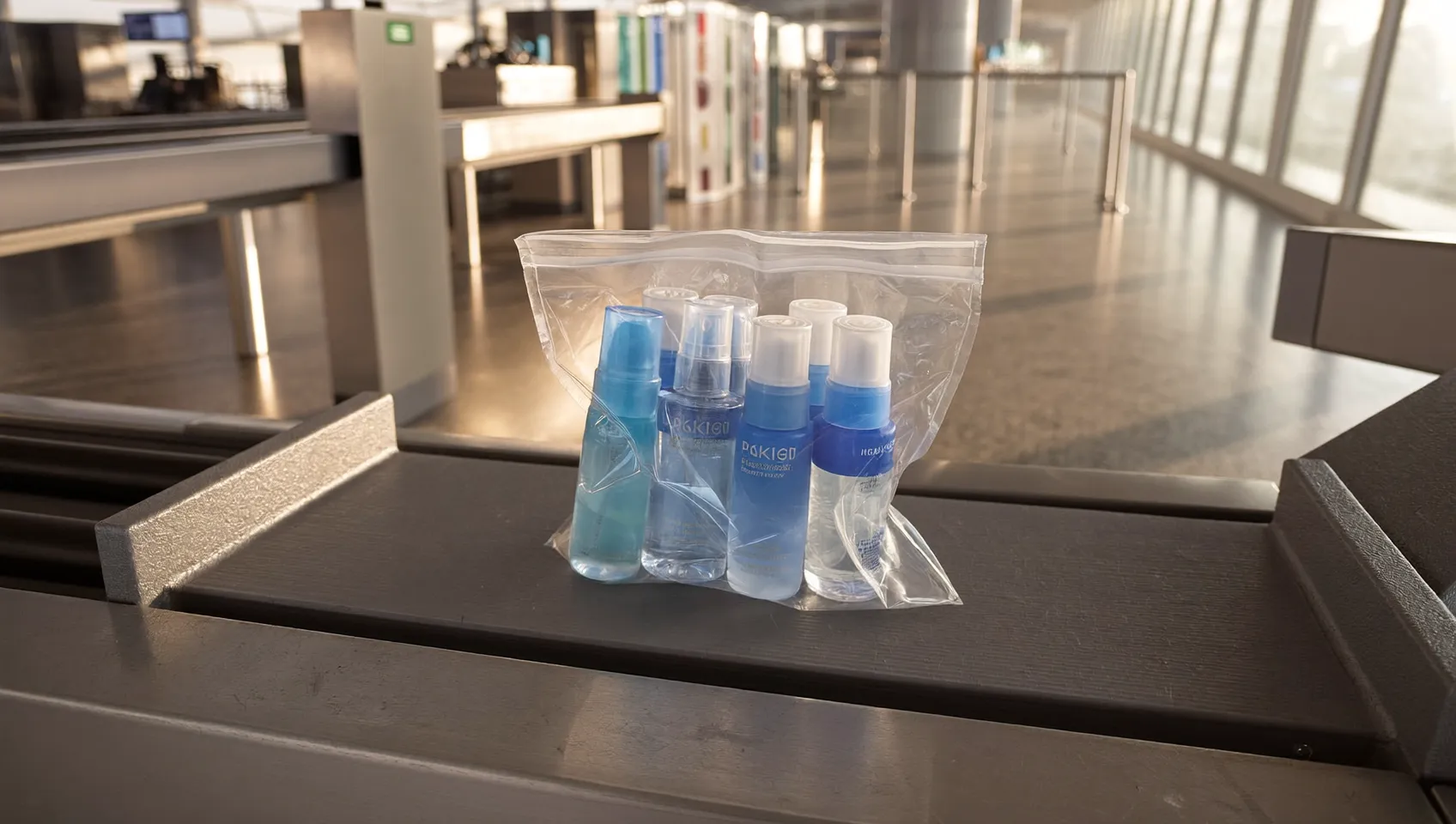
It is possible to carry spray (aerosol) in carry-on baggage, but it is subject to liquid restrictions. According to the SHGM rule, each aerosol container must be no more than 100 ml. Containers are placed in a 1-liter, resealable bag. Only 1 such bag may be carried in carry-on baggage.
The rule is not limited to a single type of flight. It covers domestic, international, and connecting flights alike. This framework also applies when flying from Izmir to Istanbul, for example. For connections at airports abroad, you should also check local rules separately; we cannot automatically generalize the SHGM rule to foreign airports.
Checks are carried out at the security checkpoint. You may be asked to remove the bag from your luggage. If the bag doesn't close or the containers don't fit, the officer may ask you to leave the excess behind.
The figures in this section apply to carry-on baggage. We do not provide a separately verified figure for checked baggage; check your airline's current rules on that matter. In the sections below, you'll find which products fall under this scope, which are prohibited, and what you should check before setting off.
Which sprays are subject to the 100 ml restriction
The restriction covers the liquids, aerosols, and gels (LAG) group. On the SHGM list, deodorants and hairsprays are included in this scope. So the answer is clear for these two products: 100 ml per container and a single resealable bag.
For other products you come across while packing that are labeled "spray" or "aerosol" on their packaging, apply the same logic and check the container volume first. If you're unsure about a product, check your airline's or departure airport's current rules.
Medical sprays
Sprays you use for your nose, throat, or respiratory tract are a group that needs to be assessed separately. The verified rules in this article do not explain the status of medical sprays. There may be a special exemption for medications, but we cannot confirm its scope here.
Don't leave a necessary medication at home just because the rule is unclear. First, contact your airline and departure airport. Carry your prescription or doctor's report with you and declare the medication to the security officer yourself.
Banned sprays: pepper spray and similar products
For some sprays, the 100 ml limit doesn't resolve the matter, because the product itself is on the prohibited list. On the SHGM list, incapacitating sprays such as pepper spray, tear gas, and animal-repellent sprays are among the prohibited items.
So don't put a small can of pepper spray you carry for self-protection into the bag just because it's under 100 ml. Dog or animal-repellent sprays fall into the same category. On the SHGM list, these products are among the prohibited items; being under the 100 ml limit does not change this. Do not put these products in either your cabin baggage or your checked baggage; if you have any doubt, consult your airline before setting off.
A forgotten can can lead to confiscation at security. Check your bag, wallet, and suitcase pockets before entering the airport. An old can may have been left in a backpack you haven't used in a long time.
Rules at foreign airports and in destination countries may differ; the verified information in this article is based on the SHGM list and does not constitute a legal assessment for other countries.
Cabin, checked baggage, and differences by airline
The verified rule applies to carry-on baggage. Airlines publish their own conditions, and this article includes only one example: according to Pegasus, aerosol products such as deodorant may only be carried in cabin baggage in containers not exceeding 100 ml/mg. The total amount cannot exceed 1 liter, and the products must be in a transparent, resealable bag.
This example is consistent with the SHGM framework, but we cannot infer another airline's conditions from this example. Read the baggage page of the airline you will be flying with.
Carry-on baggage
The SHGM rule is decisive: no more than 100 ml per container, a single 1-liter resealable bag. If your airline imposes additional conditions, these also apply.
Checked baggage
We do not have a verified figure for aerosol conditions in checked baggage. Check your airline's current rules. When choosing a ticket, you can compare baggage conditions for different options on the flight ticket search page.
Connecting flights
The liquid restriction also covers connecting flights. If you go through security again during a connection, keep your bag organized and accessible.
Common mistakes
Common mistakes include:
- Taking a large container because it's "almost empty." The rule is read based on container capacity; look at the size of the container, not the remaining amount.
- Carrying more than one bag. Only 1 single 1-liter bag is valid in carry-on baggage.
- Using an unsealed or opaque bag. The bag must be transparent and resealable.
- Overfilling the bag. A bag that won't close or is bulging can cause problems.
- Putting spray in checked baggage without checking the rule. Read the airline's conditions in advance.
- Forgetting about a prohibited spray. Pepper spray and similar products left in your bag may be confiscated.
- Not accounting for connections. The same restriction continues on connecting flights.
- Leaving necessary medication behind because the rule is unclear. Ask your airline and the airport first.
If your spray leaks in checked baggage or your suitcase gets lost along the way, you can check the lost baggage claim guide for the procedure.
Step by step: carrying spray safely on a plane
Finishing your preparation before reaching the airport prevents wasting time at the security checkpoint.
- Make a list. Write down deodorant, hairspray, and any medical sprays separately.
- Read the container volume. Check the ml value on each container. Do not put containers exceeding 100 ml in your carry-on baggage.
- Assess medical sprays separately. If necessary, ask your airline and departure airport, and carry your prescription or report with you. Confirm before giving up on the medication.
- Separate prohibited items. Leave pepper spray, tear gas, and animal-repellent sprays at home.
- Place items in the bag. Use a single 1-liter, transparent, resealable bag.
- Keep the bag on top. This way you can reach it quickly if asked to remove it at security.
- Confirm with the airline. Especially for checked baggage, read the current rules.
Plan the rest of your trip with the same care. For example, if your holiday route is to South Asia, you can check entry requirements in the Maldives visa guide.
Checklist before setting off
Before heading to the airport, check off these items one by one:
- Is each spray container no more than 100 ml?
- Are all containers in a single 1-liter, transparent, resealable bag?
- Is there only 1 bag in your carry-on baggage?
- Have deodorant and hairspray been placed in the bag?
- Have you made sure pepper spray, tear gas, or animal-repellent spray haven't been left in your bag?
- If you have a medical spray, have you consulted your airline and airport, and do you have your prescription or report with you?
- If you're making a connection, is the bag accessible during the transfer as well?
- If you're putting spray in checked baggage, have you read your airline's current rules?
Apply this checklist once before closing your suitcase, and once more as you leave home. Having to leave excess items behind at security can lead to both product loss and waiting in line.
Rules may be updated over time. Check SHGM announcements and your airline's baggage page for the day of your flight.
Frequently asked questions
Can deodorant and hairspray be taken in carry-on baggage?
Yes, they can. On the SHGM list, deodorants and hairsprays are included under the 100 ml liquid/aerosol/gel restriction. Each container must be no more than 100 ml, and all must fit into a single 1-liter resealable bag.
Can pepper spray be taken on a plane?
No. Incapacitating sprays such as pepper spray, tear gas, and animal-repellent sprays are among the prohibited items on the SHGM list. Being in a small container does not change this.
Does the spray rule change on connecting flights?
The liquid restriction covers domestic, international, and connecting flights. If you go through security again during a connection, keep your bag ready. If your airline has additional conditions, check those as well.
Can medical spray be taken on a plane?
The verified rules in this article do not explain the status of medical sprays; there may be a special exemption. Before leaving necessary medication behind, ask your airline and departure airport, and carry your prescription or doctor's report with you.
Can I put spray in checked baggage?
The verified rule in this article applies to carry-on baggage. Check your airline's current rules for aerosol conditions in checked baggage.
How many bags of spray can be carried in carry-on baggage?
Only 1 single 1-liter resealable bag can be carried. All liquid, aerosol, and gel products must be gathered in this single bag.
Can airlines set different rules regarding spray?
Only the Pegasus example is verified in this article: containers not exceeding 100 ml/mg in the cabin, a total of 1 liter, and a transparent resealable bag. For another airline, check the company's current baggage rules.
Sources
- Announcement Regarding Liquid Restrictions... — web.shgm.gov.tr
- Liquid Restrictions Practice — web.shgm.gov.tr
- Substances That Can or Cannot Be Carried in Cabin Baggage or Underfloor Cargo — web.shgm.gov.tr
- Dangerous Goods Carriage Conditions for Passengers and Crew — flypgs.com
My Travel Team
Travel Editor
The My Travel team prepares up-to-date travel, visa and tourism information and guides.