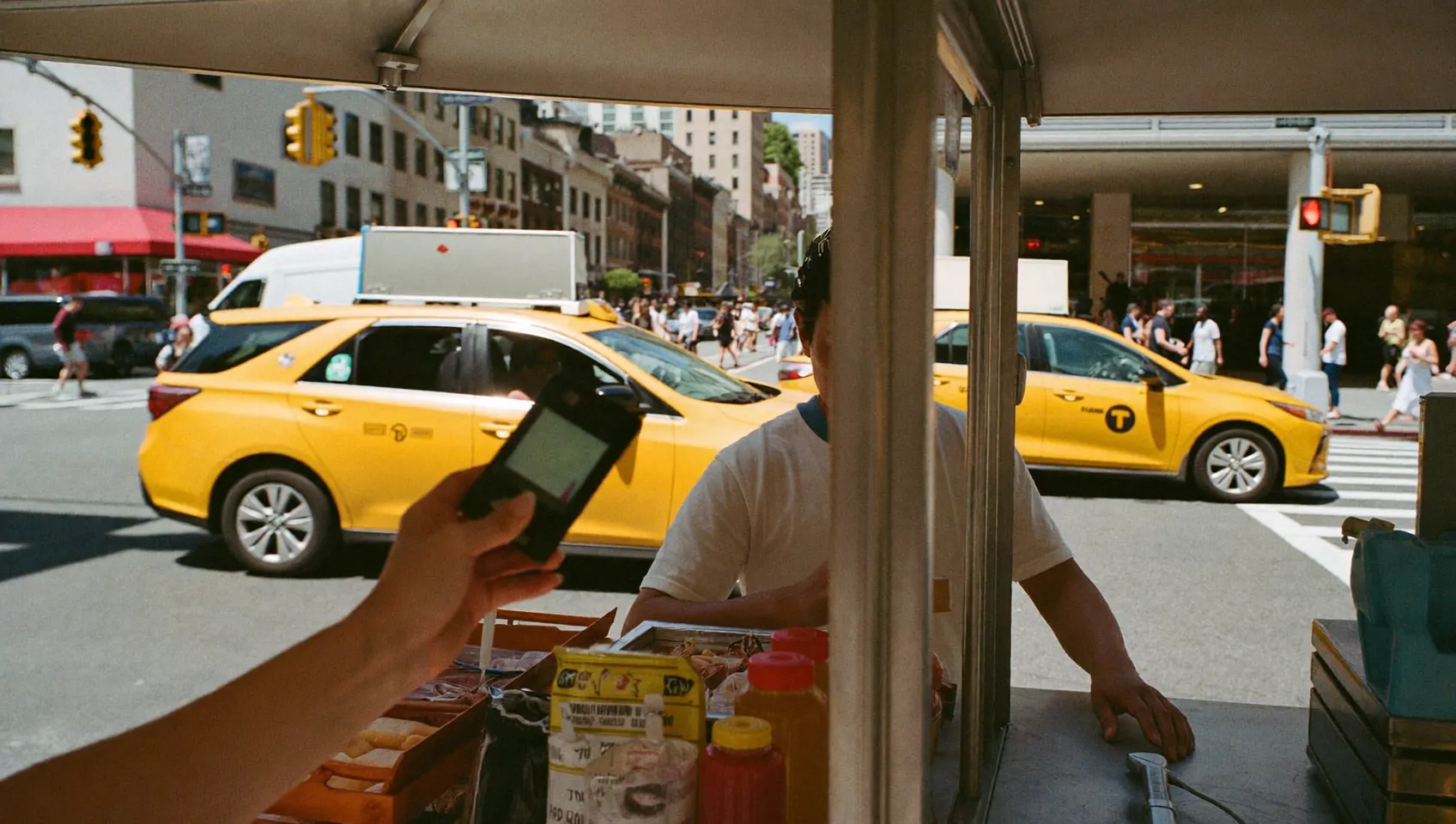
Local transportation in the US varies by city. In New York, the subway and OMNY lead the way; in other cities, taxis, ride-hailing apps and rental cars take over.
Local transportation in the US varies by city: in New York, the subway and bus system is enough, while in sprawling cities like Los Angeles you'll need a taxi, a ride-hailing app, or a rental car. The city you're visiting determines how you'll get around. This guide covers payment methods, New York fares, common mistakes, and a checklist to review before you set off.
In brief
- There's no single transportation system across the US; New York favors the subway, while Los Angeles favors taxis or cars.
- In New York, contactless OMNY payment is required to board the subway and buses; cash only works for purchasing a card.
- OMNY has a 7-day fare cap; factor it in if you're staying for an extended period.
- Yellow taxi totals exceed the metered fare; night, peak-hour, and state surcharges are added.
- Turkish citizens must obtain a visa from the consulate; plan your application around a 2-4 month timeframe.

The core rule: no single system, choose by city
There is no single local transportation system valid nationwide in the US. Public transit is operated by cities or regional authorities, and fares, payment methods, and service frequency differ everywhere. The practical distinction is as follows:
- New York: The subway and bus network is dense. Most travelers won't need to rent a car.
- Los Angeles and surroundings: Distances are long. Most travelers use taxis, ride-hailing apps, or rental cars.
- Las Vegas: The area around the main strip can be explored on foot and with short taxi rides.
- San Francisco, Washington, Philadelphia: Downtown areas can be explored by public transit and on foot.
This distinction is an editorial assessment. For exact routes and fare information, check the current page of the transportation authority in the city you're visiting. First, decide which cities you'll be staying in, then plan your transportation accordingly. Start your visa process early too: Turkish citizens need a consulate visa, details are on the US visa page.
New York: subway, bus and OMNY fares
In New York, the base fare for the subway, local bus, and Access-A-Ride is 3 dollars starting January 4, 2026. The express bus base fare is 7.25 dollars, and the reduced base fare is 1.50 dollars.
Contactless payment (OMNY, "tap and ride") is required for all subway, local bus, and express bus trips. You tap your contactless card or phone against the reader. Cash and coins continue to be accepted at card vending machines in subway stations and at 2,700 local retailers that sell OMNY cards.
Fare cap
OMNY has a 7-day fare cap:
- A maximum of 35 dollars for subway, local and select buses, Staten Island Railway, Roosevelt Island Tram, NICE, and Bee-Line.
- A maximum of 67 dollars in any 7-day period for express bus, local bus, and subway combined. This cap began in January 2026.
- 17.50 dollars over 7 days for reduced-fare users.
It makes sense to use the same card or device for all your trips so the cap applies correctly. If you're staying longer than a week and taking the subway several times a day, the cap works in your favor.
Yellow taxis in New York: surcharges
New York yellow taxis run on a meter. According to the December 19, 2022 fare schedule on the TLC page, the following surcharges apply:
- A 1.00 dollar night surcharge between 20:00–06:00.
- A 2.50 dollar peak-hour surcharge on weekdays (excluding holidays) between 16:00–20:00.
- A 0.50 dollar MTA state surcharge and a 1.00 dollar improvement surcharge added to the metered fare.
So the number you see on the meter is not the total amount you'll pay. The fare schedule dates from 2022; check the current amount on the TLC page before you board. Also check the current rules for tips and any bridge or tunnel tolls.
Editorial suggestion: for short distances, and especially during weekday evening rush hour, the subway is often a more predictable option. Save the taxi for airport transfers with luggage, late at night, or for points far from a subway line. Airport transfers may have a different fare; ask the driver or check the app before boarding.
West coast and other cities
We don't provide verified fare figures for these cities. Check the current fares on the city's transportation authority page. The following are editorial suggestions.
Los Angeles
Distances are long and points of interest are far apart. If you're staying a few days, plan for a taxi or ride-hailing app. If you're renting a car, find out the driver's license, credit card, and insurance requirements from the rental company in advance.
Las Vegas
Since hotels and entertainment areas are close together, short distances are covered on foot. Keep in mind that walking outdoors in summer can be tiring, and use a taxi or ride-hailing app for longer distances.
San Francisco
The downtown area can be explored on foot and by public transit. Due to the city's hilly terrain, allow extra time for walking.
If you want to explore the west coast route with a ready-made itinerary, check out the Los Angeles, Las Vegas and San Francisco West America route. Check the tour page to see whether intercity and local transportation are included in the program.
Exceptions and common mistakes
The most common mistakes travelers make are:
- Relying on cash. Contactless payment is required to board the subway and buses in New York. Cash only works at station vending machines and at retailers selling OMNY cards. Keep your contactless card with you.
- Assuming a foreign card will work. Confirm with your bank that your card supports contactless payment and international use.
- Thinking the taxi total is just the meter amount. Night, peak-hour, MTA state, and improvement surcharges increase the total.
- Treating every city like New York. Planning a packed itinerary around public transit in Los Angeles can waste a lot of time.
- Relying on an outdated fare. The base fare in New York was raised to 3 dollars on January 4, 2026. The 2.90 dollar figure in older blog posts is no longer valid.
- Leaving the rental car booking until the last minute. Rental terms vary by company. Read age, license, and card requirements in advance.
Don't make up figures for an airline, rental company, or app rule; check the current terms on the relevant company's page.
Step by step: how to plan your transportation
- Decide on the cities and number of days. Allocating at least 2 days per city makes your transportation plan easier.
- Sort out your visa. Turkish citizens need a consulate visa. The B1/B2 application fee is 185 USD, and processing time, including the interview wait, is 2-4 months. Multiple entry can be valid for up to 10 years; the length of stay is determined by CBP at entry. See the US visa page for details.
- Choose transportation by city. Opt for the subway and bus in New York, and a taxi, ride-hailing app, or car in Los Angeles.
- Prepare your payment method. Carry a card or phone wallet that supports contactless payment. Ask your bank about international use.
- Choose accommodation based on transit lines. A hotel near a subway station in New York will save you time.
- Check tour options if you want a ready-made itinerary. The New York, Orlando and Miami East America route and other options can be found in the US tours list.
- Check current fares upon arrival. Read the transportation authority's page and airport signage.
Checklist before you set off
Check these off one by one before leaving:
- [ ] Your visa is approved and your passport is with you.
- [ ] You've determined the mode of transportation for the cities you're visiting (subway, taxi, car).
- [ ] You have a card or phone wallet that supports contactless payment.
- [ ] Your bank has confirmed international use and your limit.
- [ ] If you're going to New York, you've calculated whether the OMNY fare cap works for you.
- [ ] You have a small amount of cash with you; you know this won't work on the subway or bus.
- [ ] If you're renting a car, you've read the license, card, and insurance requirements.
- [ ] You've determined how you'll get from the airport to your hotel.
- [ ] You've checked your accommodation's proximity to public transit.
- [ ] You've downloaded an offline map on your phone.
Also ask about transportation coverage when choosing a tour. Check the overseas tours page for current programs. For intercity flights, check your airline's current rules for baggage and other policies.
Frequently asked questions
Is renting a car necessary for local transportation in the US?
No, it depends on the city. In cities with dense public transit networks like New York, it's generally not necessary. In cities with long distances like Los Angeles, a car, taxi, or ride-hailing app is more practical.
How much is the subway fare in New York?
The base fare for the subway, local bus, and Access-A-Ride in New York is 3 dollars starting January 4, 2026. The express bus base fare is 7.25 dollars. The reduced base fare is 1.50 dollars.
Can you pay cash on the New York subway?
Not when boarding; contactless (OMNY) payment is required. Cash and coins are accepted at card vending machines in subway stations and at 2,700 local retailers that sell OMNY cards. So you can buy a card with cash and then use it to board.
What is the OMNY fare cap?
It's the upper limit on what you'll pay within a 7-day period. This limit is 35 dollars for the subway, local and select buses. The cap including express bus is 67 dollars. For reduced-fare users, the cap is 17.50 dollars.
What surcharges apply on New York yellow taxis?
According to TLC's December 19, 2022 fare schedule, there's a 1.00 dollar night surcharge between 20:00–06:00. A 2.50 dollar peak-hour surcharge applies on weekdays between 16:00–20:00. A 0.50 dollar MTA state surcharge and a 1.00 dollar improvement surcharge are also added.
Can Turks travel to the US without a visa?
No. Turkish citizens need a consulate visa. The B1/B2 application fee is 185 USD, and processing time, including the interview wait, is 2-4 months. Check the visa page for current requirements.
Is local transportation included in ready-made tours?
It depends on the tour. Check the coverage in the program section of the tour page. You'll need to plan any transportation that isn't included yourself.
Sources
- MTA Board Adopts Fare and Toll Increases to Take Effect January 2026 — mta.info
- Fare Cap — omny.info
- Changes to MTA fares and tolls in 2025 — mta.info
- Taxi Fare - TLC — home.nyc.gov
My Travel Team
Travel Editor
The My Travel team prepares up-to-date travel, visa and tourism information and guides.