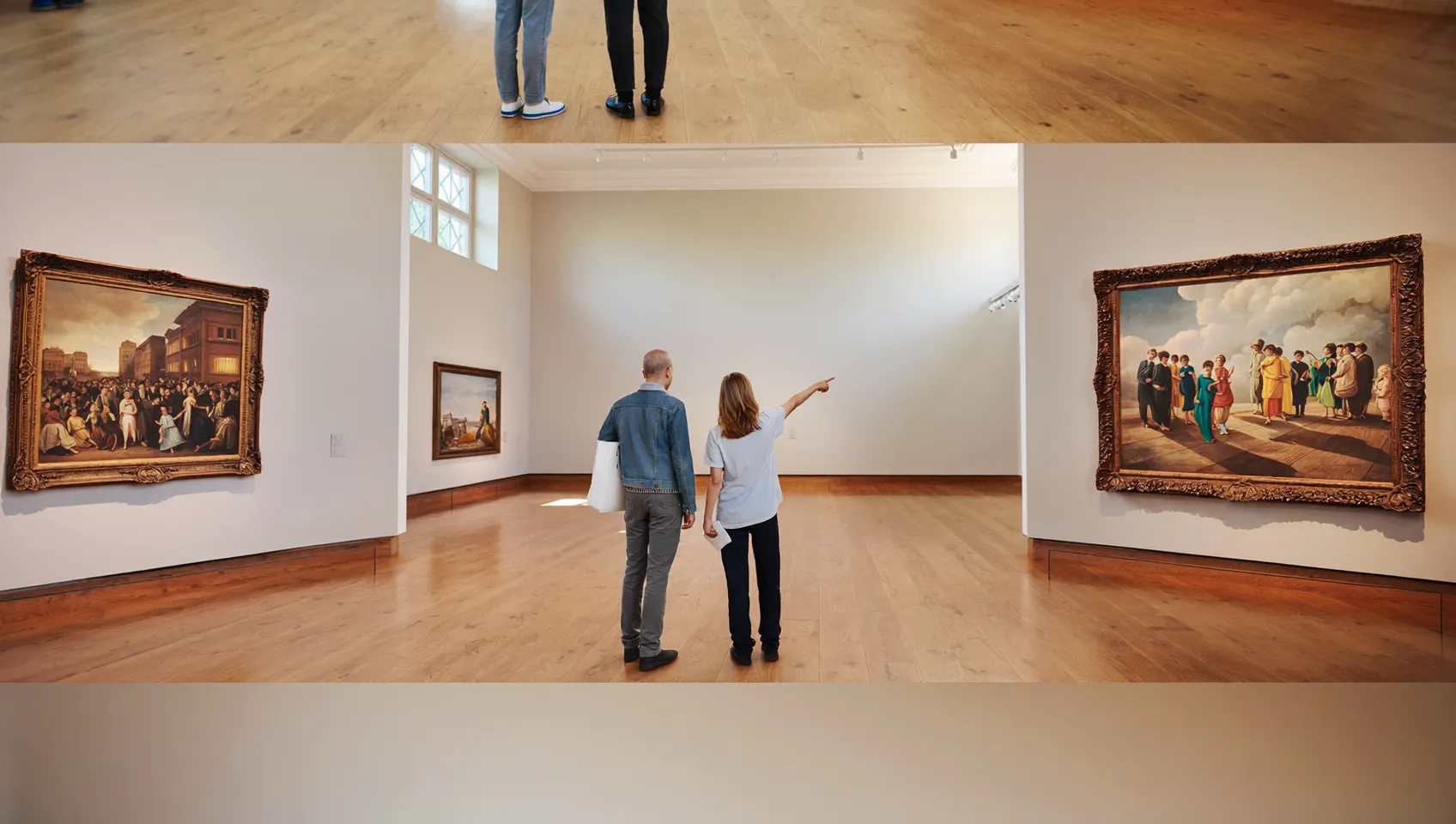
What you need to know about duration, route, admission fees, behaviour rules and strollers when visiting a museum with children; a step-by-step plan and checklist.
The answer to how to make a museum visit with kids enjoyable is this: keep the duration short and plan the route according to the child's interest. Before you go, check the admission fee and behaviour rules on the museum's official page, and choose quiet hours. Below you'll find examples of free admission, museum rules, common mistakes, a step-by-step plan and a checklist.
In short
- Keep the visit short and limit the route to two or three galleries based on the child's interest.
- Free admission and age limits vary from museum to museum; confirm them on the official page.
- Explain the rules at home: discuss limits on touching, running and shouting before entering the museum.
- Consider off-peak hours and off-season periods; use a children's book on the topic as a guide.
The core rule: a short visit, the child's interest
The basic rule of visiting a museum with children is this: plan a visit that will be shorter than it would be if you were alone. The Museum of Northern Arizona states that a visit with children will take less time than visiting alone, and recommends taking the child's interests into account when planning the route.
In practical terms, this means:
- Don't aim to see the whole museum; choose two or three galleries.
- See the subject your child loves (animals, ships, dinosaurs, space) first.
- Leave the moment the child gets tired; don't insist on the next gallery.
- Schedule a park or meal break after the museum visit.
Looking at every display case in order like an adult can bore a child. Put the piece your child chooses at the centre of the route and build the other galleries around it. This way, the visit turns into a search for an answer to a question the child is curious about, instead of imposing an adult's plan on the child. Decide on the departure time in advance too, so the decision to leave is made before tiredness sets in.
Free admission and age limits
Admission conditions vary from museum to museum; check the museum's official page before you go. The examples below are only meant to show how age limits can differ.
- Turkey: Children and young people who are Turkish citizens under the age of 18 can visit museums and archaeological sites affiliated with the Ministry of Culture and Tourism free of charge. Since the phrase "18 years and under" also appears in a section of the same source, check the museum's current announcement to avoid any issue at the gate.
- Brooklyn Museum: General admission is free for visitors aged 19 and under.
- Museum of Northern Arizona: Children aged 9 and under enter the museum free of charge.
Check the ticket page to see whether there's a separate condition for special exhibitions and events. Don't guess fees or age limits for museums not listed here; get the information from the museum's own page. If you're travelling abroad, note your child's age and the admission condition before the trip.
Behaviour rules inside the museum
Explain the rules to your child at home, not at the museum door. This way you won't have to keep repeating warnings during the visit.
Touching and distance
MoMA asks visitors to keep at least an arm's length away from the artworks. It also recommends explaining to children why they cannot touch the artworks. Explaining the reason — for example, that the works are fragile and are protected so everyone can see them — rather than simply saying "it's forbidden," makes it easier for the child to follow the rule.
Sound and movement
At the Museum of Northern Arizona, children don't need to be silent, but shouting and running are not allowed. In other words, talking, asking questions and expressing curiosity are fine; shouting and running are not. Another museum's rules on sound and movement may differ, so check the visitor page.
Food and drink
At MoMA, food and drink are consumed outside the galleries. If you're visiting a different museum, learn the rule from that museum's page and plan your snack break outside the gallery.
Strollers and practical equipment
For a young child, your equipment decisions shape the flow of the visit.
At MoMA, strollers are allowed in the museum but cannot be used on the escalator for safety reasons. So find out where the elevator is at the entrance. The stroller rule may differ at other museums; check the museum's visitor page before you go.
Your bag should include:
- A small notebook and pen, so the child can draw the artwork they like.
- Light snacks and water to eat outside the gallery.
- Comfortable shoes; both you and the child will walk a lot.
- A change of clothes for young children.
Check the museum's cloakroom policy for large bags and suitcases in advance. Learning about the cloakroom rule upon arrival wastes visit time. Keeping the equipment as light as possible gives you ease while managing the child and the stroller at the same time.
Timing and quiet hours
The Smithsonian's National Museum of American History states that off-peak hours and off-season periods can be the best times to find a quiet space. A calm environment makes it easier to look closely at artworks and ask questions during a visit with children.
Apply this as follows:
- If possible, choose off-peak hours or the off-season instead of busy hours.
- Choose the visit time according to the child's sleep and meal schedule.
- Check the museum's current page for opening hours and special-hour arrangements.
If you're considering the off-season, the article on when to go to Czechia can help you compare weather and routes by month.
For a multi-stop tour program, we recommend setting aside half a day for a museum visit; fitting more than one large museum into the same day tires children out. You can check such programs on the international tours page.
Common mistakes and a step-by-step plan
Common mistakes families make at museums include:
- Trying to see everything. The child may be exhausted by the third gallery; limit yourself to two or three.
- Teaching the rules at the door. Tension starts; talk at home instead.
- Ignoring the child's interest. An adult's route may push the child away.
- Not confirming the fee and age limit. The limit varies by museum.
- Not checking the stroller policy. Rules such as not being able to use the escalator can surprise you at the door.
- Ignoring signs of tiredness. Leaving with a restless child preserves the final impression of the visit.
Step-by-step plan:
- Choose the museum. Pick a collection that matches the child's interest.
- Prepare. The Smithsonian's National Museum of American History recommends bringing a children's book related to the exhibit and having the child use it as a "guide" during the visit.
- Read the rules. Learn the fee, age limit, stroller and food rules from the official page.
- Choose the time. Prefer quiet periods.
- Keep the route short. Choose two or three galleries, and add a break at the end.
- Give the child a role. Let them carry the map, let them choose the artwork.
- Talk after the visit. Ask, "What did you like most?"
Checklist before setting off
Complete the following before heading to the museum:
- I checked the admission fee and age limit for children on the museum's official page.
- I chose two or three galleries based on the child's interest.
- I explained the rules on touching, running and shouting to the child at home.
- I checked the rules for strollers, cloakroom and elevators.
- I learned the museum's rule on food and drink; I picked a break spot outside the gallery for snacks.
- I chose a quiet time.
- I brought a children's book or notebook related to the topic.
- I kept the visit short and decided on the departure time in advance.
If you'll be using a card for museum tickets or food abroad, check in advance whether credit cards are accepted in Germany or learn about the payment system in Egypt. This way your travel plan won't be disrupted at the door because of a payment method, and you won't lose time with your child.
Frequently asked questions
Can children enter museums for free in Turkey?
Children and young people who are Turkish citizens under the age of 18 can visit museums and archaeological sites affiliated with the Ministry of Culture and Tourism free of charge. Since the phrase "18 years and under" also appears in the source, it's good to check the museum's current announcement.
How long should you stay at a museum with children?
A visit with children takes less time than visiting alone; accept this from the start. Instead of touring the whole museum, focus on two or three galleries that interest the child. When you notice signs of tiredness, let the visit end.
Can a child run or shout in a museum?
At the Museum of Northern Arizona, children don't need to be silent, but shouting and running are not allowed. Other museums' rules may differ. Check the museum's visitor page before you go and explain the rule to the child at home.
Can you enter a museum with a stroller?
At MoMA, strollers are allowed in the museum but cannot be used on the escalator for safety reasons. Rules may differ at other museums. Check the museum's visitor page for stroller and elevator information before you go.
How do you explain to a child why they can't touch the artworks?
MoMA asks visitors to keep at least an arm's length away from the artworks and recommends explaining to children why they cannot touch them. Instead of simply saying "it's forbidden," tell them that the works are fragile and are protected so everyone can see them. Talk about this before entering the museum.
Can children have food and drink in a museum?
At MoMA, food and drink are consumed outside the galleries. Another museum's rule may differ; check the visitor page. Plan the snack break for an area outside the gallery.
Sources
- S.S.S. — dosim.ktb.gov.tr
- Families and kids · Brooklyn Museum — brooklynmuseum.org
- Family Guide • Museum of Northern Arizona — musnaz.org
- Tips for family visits — moma.org
- Tips for visiting a museum with kids: Don't arrive empty-handed — americanhistory.si.edu
My Travel Team
Travel Editor
The My Travel team prepares up-to-date travel, visa and tourism information and guides.