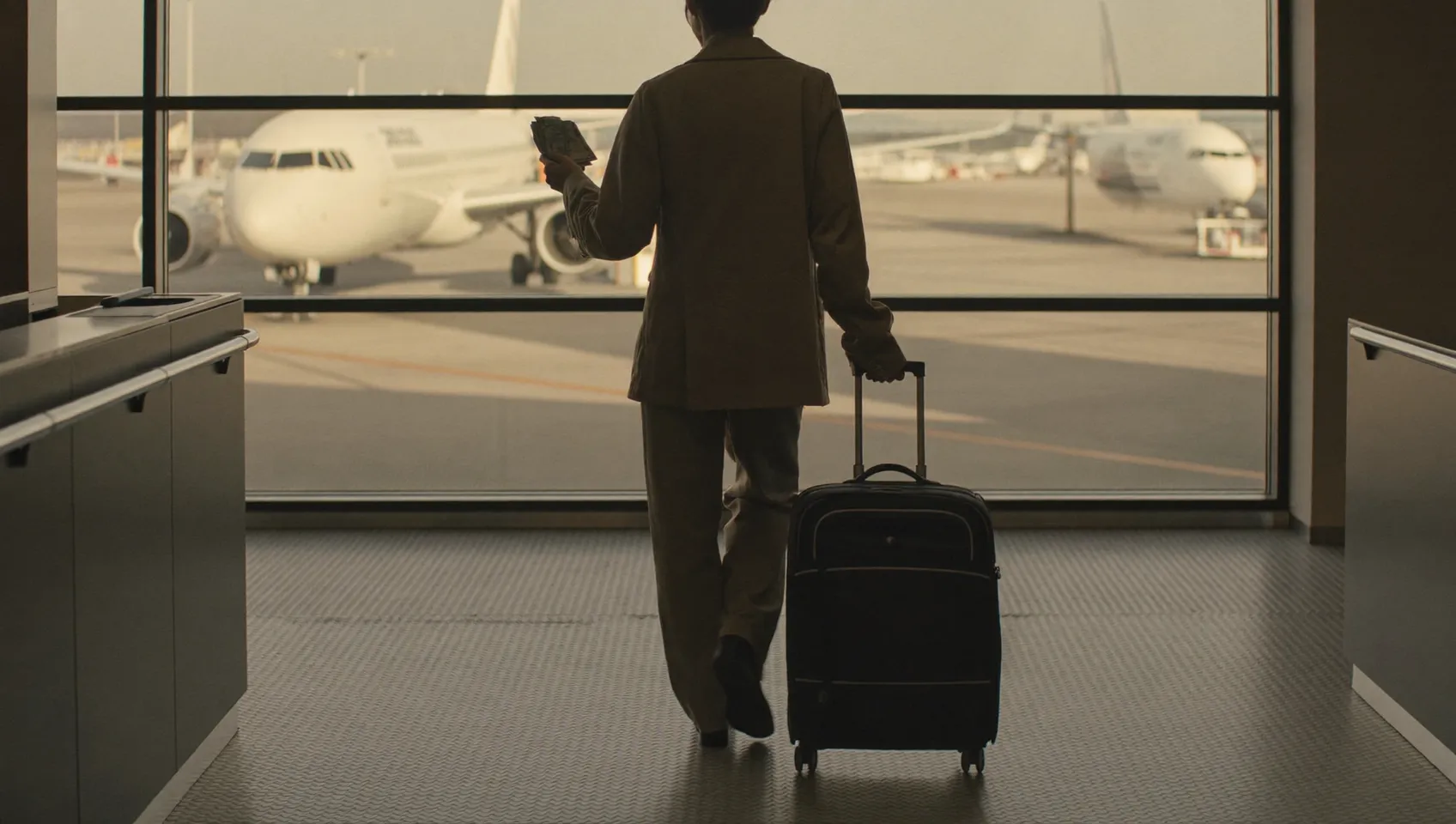
Exchanging currency at the airport is often not the most advantageous option. It's better to exchange only a small amount for your first day's cash and handle the rest in the city.
Is it worth exchanging currency at the airport? If you don't have an urgent cash need, generally not: airport exchange offices may apply a wider buy-sell spread or commission. Only exchange the small amount you'll need for transport and food on the first day, and leave the rest for exchange offices in the city centre.
In short
- Unless you have an urgent need, exchanging at a city centre office rather than the airport may be more advantageous.
- Only exchange a small amount for transport, food and tips on the first day.
- Ask about the buy-sell spread and commission before the transaction.
- Cash in foreign currency over 10,000 Euros or its equivalent must be declared at customs.
The core rule: Don't exchange at the airport unless you have to
Airport currency exchange offices may not always be the most advantageous option. Some offices have a wider buy-sell spread, and some may also charge a commission. The reason is simple: the traveller has few options, and the office may reflect this in its pricing.
This isn't a prohibition or an obligation, it's a matter of cost. If you don't have an urgent cash need, it may be advantageous to prefer currency exchange offices in the city centre. The difference becomes noticeable with larger amounts; for exchanging a few hundred liras, your loss remains limited.
One question suffices for the decision: Do I genuinely need cash within the first few hours of arriving at my destination? If the answer is yes, exchanging a small amount is reasonable. If no, waiting works out cheaper.
How to read the exchange rate gap?
The real cost at an office isn't a single rate, it's the difference between the buy and sell rates. The office applies a high rate when selling to you and a low rate when buying from you. The bigger the gap, the more expensive the exchange.
Press reports mentioned that at an exchange chain on the departures level of Istanbul Airport, the dollar buy rate was listed as 30.045 TL and the sell rate as 55.799 TL. The date of the report is unclear and it isn't an official source; so don't take it as the current rate. Still, it illustrates something: there are two figures on the board, and the gap between them is your cost.
When comparing, pay attention to:
- Read the buy and sell rates together, don't just look at the larger figure displayed.
- Ask whether there's a commission or transaction fee before exchanging.
- Check the rate of a city office by phone or online on the same day.
- See the calculated total amount in writing or on screen before the transaction.
How much cash is enough?
For general use, having enough local currency to cover transport, food, tips and small expenses where cards aren't accepted on the first day may be sufficient. In other words, the goal isn't to convert your entire holiday budget at the airport, but to get comfortably through the first 24 hours.
Items for which you'll need cash
- Transport from the airport to the hotel (taxi, metro, bus)
- First meal and water
- Tips
- Places like small vendors, toilets, and markets that don't accept cards
Situation varies by country
In some countries, cards are accepted almost everywhere; in others, cash is essential. If you're going somewhere where cash is predominantly used, such as Egypt, plan your starting amount by checking the article Currency and Card Use in Egypt. Determine the amount based on your own spending habits; don't copy a figure from someone else's list.
When is it reasonable to exchange at the airport?
Despite the price difference, there are situations where exchanging at the airport makes sense. What they all have in common is that time or security outweighs the cost.
- Late night arrival: If city offices are closed and a taxi or transfer requires cash.
- Needing cash during a layover: If you'll buy food or transport during a long wait.
- Risk of your card not working: If you don't want to face problems on your first transaction in a new country.
- Short and intensive schedule: If you need to make it to a meeting or tour as soon as you arrive in the city.
Even in these situations, don't exchange all of it. Take only what's necessary. If you'll be transferring flights, having cash on hand is useful if a baggage issue arises on your first flight; our article on the lost baggage claim process will also be helpful on this topic.
Common mistakes and the declaration limit
The most common mistake is exchanging all your money at once at the airport. The second is making the transaction without comparing rates or asking about commission. The third is not taking flight time into account when exchanging: time lost in a queue can make it difficult to reach the gate.
There's one more rule: Passengers wishing to take out of the country amounts in foreign currency exceeding 10,000 Euros or its cash equivalent are required to make a declaration to the customs officer. If you'll be carrying a large amount of cash with you, calculate this limit in advance. If you're combining different currencies, pay attention to the Euro equivalent, and if you're unsure, check the current practice with customs.
Declaration isn't required for small amounts, but travelling with large amounts of cash is already not a method we recommend, both for security and cost reasons.
Step by step: How to manage your money
- Before setting off, research how widely cards are accepted in the country you're visiting.
- Roughly calculate your first-day spending: transport, food, tips.
- If possible, obtain this small amount in advance in your own city, comparing rates.
- If you need to exchange at the airport, only convert the amount needed for the first day.
- Ask about the buy-sell rate and commission before the transaction, and keep the receipt.
- Once you reach the city centre, handle remaining needs at an office with a better rate.
- When using your card, choose to pay in the local currency; if the terminal offers to charge in Turkish lira or another currency at its own rate, it's generally better to decline.
When planning your ticket and flight time, pay attention to the arrival time; for flights landing at night, the possibility that city offices will be closed changes your cash plan. You can check arrival times to compare options on the search for flight tickets page.
Checklist before setting off
- I checked whether city offices or ATMs will be operating at my arrival time.
- I determined the amount of local currency needed for the first day.
- I confirmed my card is enabled for use abroad.
- My total cash on hand is below the 10,000 Euro threshold; if not, I will make a declaration.
- I will not make a transaction without asking about the buy-sell spread and commission.
- I've allowed enough time for exchanging at the airport so I won't miss my flight.
- If the country requires a visa, my documents are ready; for example, I checked requirements with guides like the Maldives visa information.
Frequently asked questions
Is it worth exchanging currency at the airport?
Generally not, unless you have an urgent cash need. Airport offices may apply a higher buy-sell spread or commission. It's reasonable to exchange only the small amount needed for the first day.
Why can currency exchange be more expensive at the airport?
Since travellers have few alternatives, some offices apply a wider buy-sell spread. Some may also charge an additional commission. That's why you should ask about both rates as well as any fee before the transaction.
How much foreign currency can I carry with me when leaving the country?
Passengers wishing to take out amounts exceeding 10,000 Euros or its cash equivalent are required to make a declaration to the customs officer. Below this limit, no declaration is required. Still, carrying a lot of cash isn't recommended for security reasons.
How much cash is enough for the first day in the country I'm visiting?
Enough local currency to cover transport, food, tips and small expenses where cards aren't accepted is generally sufficient. The amount varies depending on the country and your spending habits. Less cash is needed in countries where cards are widely accepted.
Is a city centre exchange office always cheaper?
Not always, but it can be more advantageous in most cases. To compare, read the buy and sell rates together. If there's a commission, add it to the total cost as well.
What should I do if I'm arriving late at night?
Since city offices may be closed, it's reasonable to exchange a small amount at the airport for transport and immediate needs. Don't convert all of it. Handle the rest in the city the next day.
Sources
- Should you prefer card or cash for spending abroad? — enuygunfinans.com
- 8 Tips to Avoid Unnecessary Spending Abroad — dogavegezi.com
- Those who exchanged dollars/euros at the airport got burned: This is not a spread, it's a guillotine - — milligazete.com.tr
- Republic of Turkey Ministry of Trade — ticaret.gov.tr
My Travel Team
Travel Editor
The My Travel team prepares up-to-date travel, visa and tourism information and guides.