A room safe physically protects your belongings but provides no legal guarantee. Learn the difference between a safe and reception deposit, common mistakes, and the correct steps to use it.
Is the hotel safe secure? It's conditional: it physically protects your belongings, but if valuables are left only in the room safe, the hotel is only liable if it or its staff are at fault. Security depends on what you leave and how. In this article, you'll find the rule, the differences, common mistakes, and the steps to take before you set off.
In short
- For valuables left only in the room safe, the hotel is only liable if it or its staff are at fault.
- If you hand over valuables to the hotel for safekeeping, the hotel is liable for the full value; get a written document.
- For general belongings, liability cannot exceed 3 times the daily accommodation fee unless fault is attributed.
- Photographing your belongings, choosing a hard-to-guess code, and checking your insurance are basic precautions.
The essence of the rule: valuables left only in the safe
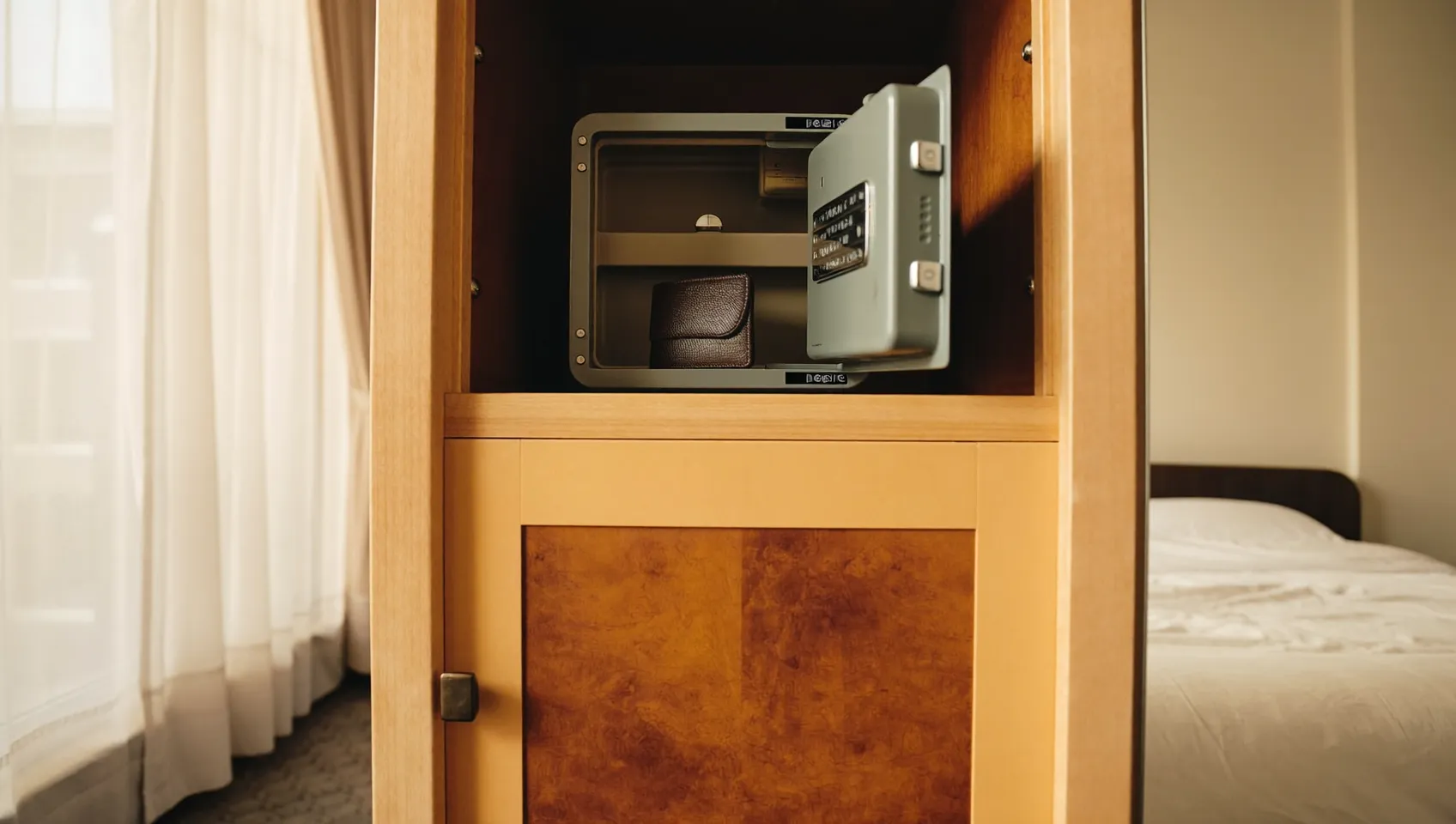
A room safe provides a lock, not a legal guarantee. The rules below come from the Turkish Code of Obligations (TBK) and apply only to hotels in Turkey; for hotels abroad, the rules of that country apply and may differ. According to Article 577 of the Turkish Code of Obligations, if valuables, significant amounts of money, or securities are not handed over to the operator for safekeeping—for example, if they are left only in the room safe—the hotel is only liable if it or its staff are at fault.
In practical terms, this means that if you leave your valuables only in the safe and suffer a loss, whether you can get compensation from the hotel depends on the fault of the hotel or its staff. How and by whom fault is to be shown varies according to the circumstances of the incident; in the case of a serious loss, legal assistance is needed.
The picture changes in the opposite case. If the operator has taken the valuables for safekeeping, or has refused to do so, it is liable for the full value of the item. In other words, handing an item over to the hotel for safekeeping produces a legally different result than placing it in the safe.
For this reason, the room safe is a reasonable first layer of protection for everyday valuables: passport, spare bank card, small amounts of cash. For high-value items, it should not be considered sufficient on its own.
The difference between a room safe and reception deposit
Although the two methods look similar, their legal consequences differ.
Room safe
You place the item and lock it yourself. The item is not considered to have been handed over to the hotel for safekeeping; therefore the fault-based rule above applies to valuables, money, or securities.
Reception deposit
You hand the item to the hotel, and the hotel takes it for safekeeping. In this case, the hotel is liable for the full value of the item. The same result applies if the hotel refuses to accept the valuables for safekeeping (TBK Art. 577).
When depositing items, request the following:
- A written list of the items handed over
- The date, time, and the name of the staff member who received them
- If a sealed envelope is used, a signed copy noting the envelope number
Whether a hotel accepts deposits and under what conditions may vary. When comparing facilities on the hotel search page before booking, note the safe and deposit services; if unclear, ask the hotel directly.
Practical tip: keep a photo of your passport stored separately on your phone. If the original is lost, this speeds up your procedures.
Liability limit for general belongings
In addition to the rule on valuables, there is a separate provision for items brought by guests. According to TBK Art. 576, the hotel's liability for the loss, damage, or theft of items brought by guests cannot exceed 3 times the daily accommodation fee per guest, unless fault is attributed to the hotel or its staff.
These two provisions should not be confused:
- Valuables, significant amounts of money, or securities left only in the room safe are subject to Art. 577: the hotel is only liable if it or its staff are at fault.
- Other items you bring are subject to the upper limit in Art. 576; unless fault is attributed, this cannot exceed 3 times the daily fee.
Whether an item is considered a valuable may vary depending on its value and the specific situation. Do not conclude definitively from this article which provision applies to an expensive electronic device; if you suffer a valuable loss, consult a lawyer.
Because of this uncertainty, if you are carrying valuable items, review your travel insurance. Coverage varies by policy; read which items are covered under which conditions before purchasing.
Common mistakes when using the safe
Many problems with safes stem from habitual mistakes.
- Choosing a predictable code. Birth year, consecutive numbers, or the room number are the first codes that get tried.
- Leaving the code visible. A code written on paper should not be left next to the safe or in a bag.
- Putting everything in the safe and assuming it's safe. If the safe can be opened, everything inside carries the same risk. It's better to keep passports and cards separate.
- Not documenting the items. Without a photo of the contents, it becomes difficult to explain what was lost and its value.
- Noticing a malfunction and staying silent. If the safe is broken, give written notice and request that the safe or room be changed.
- Forgetting to empty it at checkout. It's not uncommon for people to leave their passport in the safe and head to the airport. Do a final check before leaving the door.
Some electronic safes may have an opening method that hotel management can use. Who has access to this method and whether records are kept varies by property; there's no harm in asking at reception.
Another common mistake is never informing the hotel that an item is valuable. If you want to hand valuables over for deposit instead of keeping them in the safe, do so explicitly and in exchange for documentation.
Step by step: using the safe correctly
Follow this order when you enter your room:
- Test the safe while empty. Close it, enter your own code, open it, and close it again. Make sure it locks properly.
- Set your own code. Choose a code that others cannot guess; don't leave the code next to the safe.
- Photograph the contents. Take a photo of the items you put in the safe; make sure serial numbers are visible if present.
- Decide what goes where. Put your passport and spare card in the safe, and carry your daily spending card with you. Consider depositing high-value items at reception.
- Carry little cash with you. Check how widely cards are accepted from the articles Currency and credit card use in Germany or Currency and credit card use in Egypt. Where cards are widely accepted, less cash needs to be kept in the safe.
- Act immediately if a loss occurs. Give written notice to hotel management, have a report drawn up with the local police, and notify your insurer.
- Leave the safe open and check it at checkout. Confirm that it's empty.
This sequence ensures you have a record of date, time, and contents in the event of a possible dispute.
Checklist before setting off
Review the following during booking and packing:
- Does the hotel's page mention room safe and reception deposit services, and if not, have you asked the hotel?
- If you want to hand over valuables for safekeeping, will you get a written list and signed document?
- Does your travel insurance cover theft and loss of belongings, and are there additional conditions for items left in the safe?
- Are photos of your passport, ID, and cards saved somewhere separate, such as cloud storage?
- Is your spare bank card and emergency contact information kept separate from your main wallet?
- Have you left unnecessary valuables at home?
- Have you added an alarm or note to check the safe on checkout day?
Not leaving your documents in the safe on departure day is the most important final checklist item. Before heading out the door, confirm that your passport, cards, and phone charger are with you.
Frequently asked questions
Is the hotel safe secure?
It's a reasonable physical precaution, but it provides no legal guarantee. If valuables, significant amounts of money, or securities are left only in the room safe, the hotel is only liable if it or its staff are at fault. For high-value items, reception deposit and insurance are a safer route.
If my belongings are stolen from the safe, will the hotel pay?
At hotels in Turkey, if valuables, significant amounts of money, or securities are not handed over to the hotel for safekeeping and are left only in the room safe, the hotel is only liable if it or its staff are at fault (TBK Art. 577). For non-valuable items in the safe, the limit of 3 times the daily accommodation fee (TBK Art. 576) applies unless fault is attributed. For hotels abroad, the rules of that country apply. Whether fault exists depends on the circumstances of the incident. Whether an item is considered a valuable can also be disputed; seek legal assistance for a serious loss.
Is the hotel liable for items I leave at reception?
If the operator has taken valuables for safekeeping or has refused to do so, it is liable for the full value of the item. When handing items over, be sure to get a written list of the items and a signed document.
Should I put my passport in the hotel safe?
Keeping your passport in the safe is better than leaving it out in the open in the room. Still, keep a photo of it stored separately on your phone. Make sure to empty the safe before leaving the hotel.
Can hotel staff see the safe code?
Some electronic safes may have an opening method that hotel management can use. Who has access to this and whether records are kept varies by hotel. Ask at reception, and don't use the same code as your bank card PIN in the safe.
What should I do if the safe is broken?
Don't use the safe and give written notice to reception. Request that the room or safe be changed. Keep a record of the date and time of your notification.
Sources
- Turkish Code of Obligations (TBK) — resmigazete.gov.tr
My Travel Team
Travel Editor
The My Travel team prepares up-to-date travel, visa and tourism information and guides.