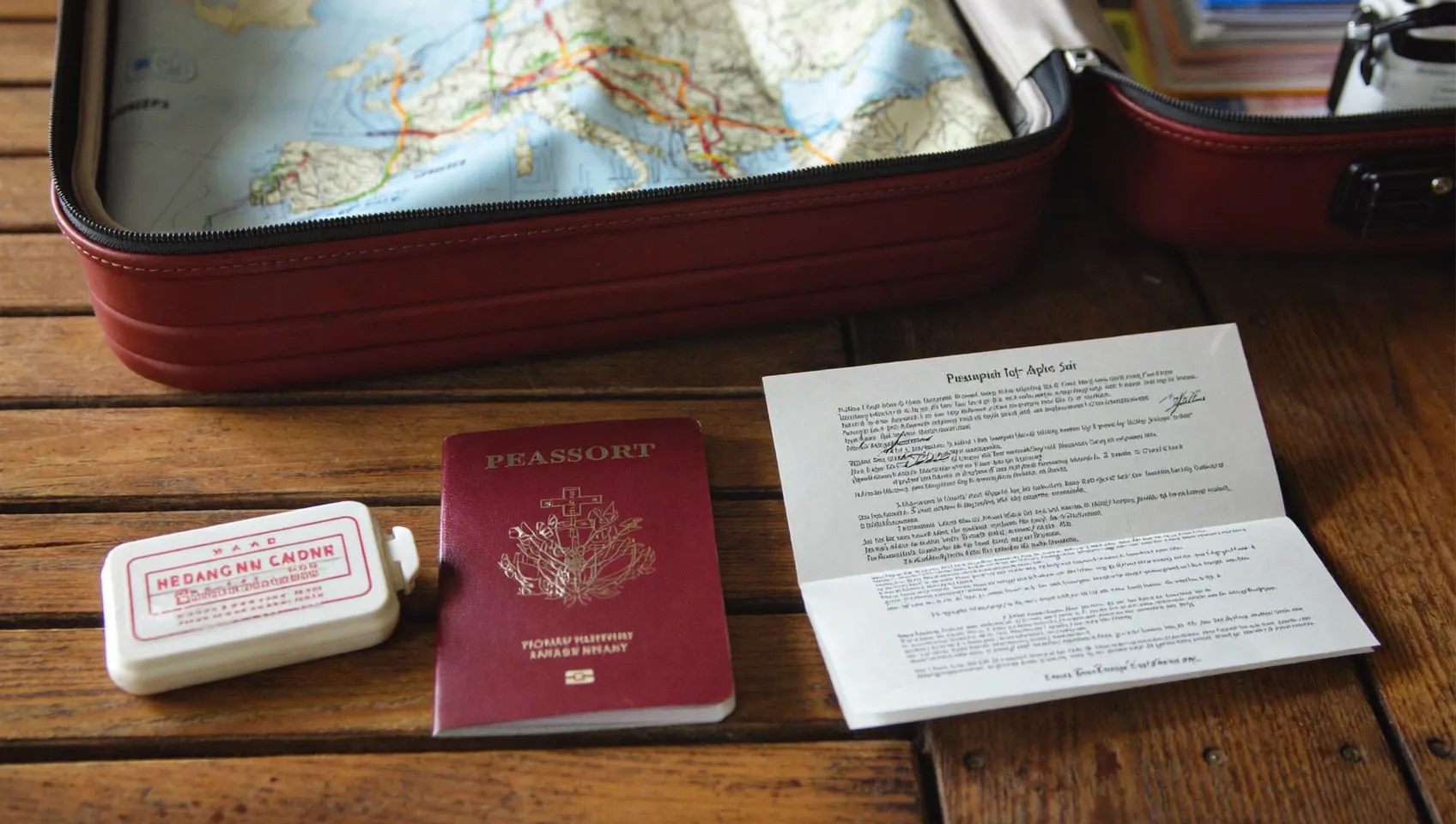
Travel health insurance is among the documents required for a Schengen visa application. If the policy's coverage, covered countries, or duration are incorrect, your file may be considered incomplete.
Yes, travel health insurance is mandatory for a Schengen visa: the policy must cover emergency medical care, hospitalization, and repatriation costs including death, must be valid in all Schengen countries, and must cover the entire stay. Below you will find the coverage requirement, common mistakes, how to choose a policy step by step, and what to check before applying.
In brief
- The policy must cover emergency treatment, hospitalization, and repatriation costs including death.
- Choose a policy with coverage of at least 30,000 Euros that is clearly stated in the document.
- Coverage must include all Schengen countries; a single-country policy is not sufficient.
- Set the policy dates to cover the return day as well.
- Notify your insurer in advance if you are traveling for sports or medical treatment purposes.
The essence of the rule: why insurance is required
Health insurance is among the documents required for a Schengen visa application. The consulate or visa application center considers this document an integral part of the file; an application made without insurance or with a policy that does not meet the requirements may be considered incomplete.
The costs that the policy must cover fall into three categories:
- Emergency medical care: Treatment required due to a sudden illness or accident during the trip.
- Hospitalization: Costs incurred when inpatient treatment is required in an emergency.
- Repatriation: Transport of the traveler back to their country in case of illness or death.
If any of these three items is missing from the policy, the document is not considered sufficient for visa purposes. An ordinary domestic health insurance or a package that only provides baggage and cancellation coverage does not meet this requirement; the policy must specifically include emergency health coverage and repatriation abroad.
The purpose of insurance is not only to obtain a visa. Emergency room and inpatient treatment costs can be high in Europe; the cost that would arise if repatriation is needed is also at a level most travelers cannot afford. Therefore, choose the policy not as a formality, but as the real safeguard of your journey. You can check the travel health insurance page for policy options with appropriate coverage.
Three conditions sought in the policy: coverage, country, and duration
The insurance document examined in the visa file is checked from three angles. Skipping any one of them can cause the application to be returned.
Coverage amount
According to the explanation given for the Germany visa, the policy must have coverage of at least 30,000 Euros and must cover repatriation and emergency medical treatment costs in case of illness or death. Make sure the coverage amount is clearly written in Euros in the policy document; showing the amount only in another currency may complicate the review.
Geographic coverage
The insurance must be valid in all Schengen countries. A policy that only covers the country you are applying to or only the two countries you are visiting is not sufficient. Check that the document clearly states coverage of "Schengen countries" or "Europe."
Duration
The policy must cover the entire duration of the stay. You must be insured every day from your departure date to your return date. If your flight departs after midnight or there is a connection on the return, set the policy end date according to the day your return flight lands in Turkey.
If these three conditions are not met together, the document may be considered incomplete even if the coverage amount is high.
Differences based on the purpose of travel
The basic requirements are the same for every Schengen application; however, the purpose of the trip can change what is expected from the policy.
- Tourist and business travel: A standard travel health insurance covering emergency medical care, hospitalization, and repatriation is generally sufficient.
- Participation in sports events: If you are planning an activity such as skiing, a marathon, or diving, stricter rules apply. According to the explanation given for Germany, the applicant must notify their insurer of this plan and pay any additional cost if applicable. Some standard policies exclude accidents in risky sports from coverage.
- Travel for medical treatment purposes: If you are traveling to Europe for treatment, stricter rules also apply here. Planned treatment is not covered under emergency coverage; therefore, you must notify your insurer of the situation in advance.
For multiple-entry visa applications, the consular instructions of the country you are applying to determine which period the policy must cover. At this point, check the current document list of the visa application center. If you are curious about long-term multiple-entry visa conditions, you can read about how application history is evaluated in Schengen trusted person formula and 5-year visa.
Insurance requirements may differ in countries outside Schengen; for example, also check the relevant country's rules for South Africa visa information.
Exceptions and common mistakes
Most insurance-related problems in the visa file arise from small but preventable mistakes.
- Leaving a date gap: Start and end the policy according to the calendar day, not the flight time. If the return day is left outside the coverage, the entire stay will not be covered.
- Single-country coverage: A policy that only covers the country you applied to is invalid when you move to other Schengen countries and does not meet the requirement.
- Skipping the repatriation coverage: Some affordable packages do not include repatriation coverage. Look for the term "repatriation" or "transport of the deceased/patient" in the policy text.
- Not notifying sports or treatment plans: If an accident occurs during a ski holiday and it is not covered by the policy, the cost will be your responsibility.
- Relying on domestic health insurance: Private health insurance valid in Turkey does not automatically cover emergency treatment and repatriation abroad. Even if it does, a separate coverage document may be required for the visa.
- Lack of an English document: The consulate may require the policy to be issued in an understandable language. Check whether the document is in English or the language of the country applied to.
If your travel dates change after the visa is approved, update your policy as well. Having a visa does not remove the right to question the validity of insurance at the border; being left outside coverage due to changed dates creates problems both at the border and at the time of treatment.
Step by step: getting the right policy and adding it to the application
If you follow the order below, the insurance document will not cause problems in your file.
- Clarify the dates. Determine the departure and return days according to your flight reservation. If you want to leave a margin of flexibility, consider starting the policy one day earlier and ending it one day later.
- Choose the coverage. Make sure the policy covers all Schengen countries.
- Check the coverage amount. Choose a policy with coverage of at least 30,000 Euros that covers emergency medical treatment, hospitalization, and repatriation costs.
- Notify special circumstances. If you have a sports activity or medical treatment plan, notify your insurer in writing; pay any additional cost if it arises.
- Purchase the policy. You can use the travel health insurance page to compare options and obtain a policy suitable for the visa.
- Check the document. Read one by one that your name is written exactly as in your passport, and check the dates, coverage amount, and coverage region.
- Add it to the file. Place a printout of the policy with your application documents; also keep a digital copy on your phone.
- Save the emergency number. Add the 24/7 assistance line on the policy to your phone contacts; you may need to notify this line before starting treatment abroad.
Checklist before setting off
Check off the items below before applying and before heading to the airport.
Before application
- The policy covers emergency medical care, hospitalization, and repatriation costs.
- Coverage is at least 30,000 Euros and clearly stated in the document.
- Coverage includes all Schengen countries.
- Start and end dates cover the entire stay.
- First and last name are exactly the same as in the passport.
- If there is a sports or treatment plan, it has been notified to the insurer.
Before the trip
- If travel dates have changed, the policy has been updated.
- You have both printed and digital copies of the policy with you.
- The assistance line number is saved on your phone.
- Regularly used medications and prescriptions are in your hand luggage.
- It has been checked that electronic items in your carry-on comply with the rules; for example, take a look at rules for bringing a power bank on a plane.
If you are also planning a holiday outside Schengen, for example the Cairo, Luxor, and Aswan route in Egypt, do not neglect to get a separate travel health insurance with appropriate coverage for that trip as well. Even if a visa is not required, the risk of emergency treatment costs abroad is the same.
Frequently asked questions
Is travel health insurance mandatory for a Schengen visa?
Yes, health insurance is among the documents required for a Schengen visa application. The policy must cover emergency medical care, hospitalization, and repatriation costs including death.
What is the minimum coverage amount for Schengen insurance?
According to the explanation given for the Germany visa, the policy must have coverage of at least 30,000 Euros. This coverage must include emergency medical treatment and repatriation costs in case of illness or death.
Is it sufficient if the insurance only covers the country I am traveling to?
No, the insurance must be valid in all Schengen countries. A policy covering only one country does not meet the visa requirement and will not protect you if you move to another Schengen country.
Can the insurance duration be shorter than my flight dates?
No, the policy must cover the entire duration of the stay. You must be insured every day from your departure day until your return day to Turkey.
Is standard travel insurance sufficient for a ski holiday?
Stricter rules apply for participation in sports events. According to the explanation given for Germany, you must notify your insurer of this plan and pay any additional cost if applicable; otherwise, accident costs may be left outside coverage.
Can my private health insurance in Turkey be used for a Schengen visa?
Domestic health insurance generally does not automatically cover emergency treatment and repatriation costs abroad. If there is no document clearly showing that your policy meets the visa requirements, you need to obtain a separate travel health insurance.
What should I do if my dates change after the visa is issued?
Update your policy according to the new dates or obtain additional coverage. The insurance must cover the entire stay; the cost of any health problem experienced on days outside the coverage will belong to you.
Sources
- Applying for a Schengen visa - Migration and Home Affairs — home-affairs.ec.europa.eu
- Health Insurance for the Schengen Visa - Anyone who applies needs health insurance — health-insurance.de
- Europe for Schengen Visa Travel Insurance — axa-schengen.com
My Travel Team
Travel Editor
The My Travel team prepares up-to-date travel, visa and tourism information and guides.