Powerbanks can only be carried in cabin baggage. The 100 Wh limit, the rule of 2 per person, the in-flight charging ban, mAh-to-Wh calculation and differences between THY, Pegasus and AJet.
Yes, you can bring a powerbank on a plane, but only in your cabin baggage: powerbanks up to 100 Wh are generally accepted in hand luggage, but placing them in checked (hold) baggage is forbidden. Under the ICAO amendment dated 27 March 2026, each passenger may carry a maximum of 2 units, and they cannot be charged on board. Below you'll find the mAh calculation, airline differences and a checklist.
In short
- Carry your powerbank only in your hand luggage or on your person; never place it in checked baggage.
- Bring a maximum of 2 powerbanks per person, each not exceeding 100 Wh.
- If Wh is not shown on the label, calculate it using Wh = mAh × Volt ÷ 1,000.
- Charge your powerbank at home; charging it on the plane is forbidden, and using it is also banned on Pegasus and AJet.
- If your cabin bag is gate-checked into the hold, remove the powerbank and keep it with you.
The essence of the rule: cabin yes, hold no
Powerbanks contain lithium batteries and carry a fire risk. That's why there is one basic rule: powerbanks and spare lithium batteries may only be carried in hand luggage, never in checked baggage.
The key limits are as follows:
- Capacity: Powerbanks up to 100 Wh are generally accepted in cabin baggage. Those between 100–160 Wh can only be carried with airline approval; units above 160 Wh are generally not accepted on passenger aircraft.
- Quantity: Under the ICAO technical instruction amendment dated 27 March 2026, a maximum of 2 powerbanks per person may be carried.
- Charging: The same amendment banned charging powerbanks on board the aircraft.
- Location: If your cabin bag is gate-checked or checked at check-in into the hold, you must remove the powerbank from the bag and keep it with you.
If a battery in the cabin overheats or emits smoke, the crew can intervene immediately; this is not possible in the cargo hold. This is the logic behind the rule, and because of it, if a powerbank is detected in checked baggage, you may be asked to open your suitcase, or the suitcase may not be loaded onto the plane at all.
Carrying the powerbank with you throughout the journey, in an easily accessible pocket, is the most trouble-free method. Regardless of which airline you fly with, the rule against placing it in checked baggage does not change; differences mostly arise around in-flight use and approval for higher capacities.
mAh and Wh: how to calculate your powerbank's capacity
Airport rules are set in terms of Wh (watt-hours), whereas most powerbank boxes show mAh. So you first need to know your device's Wh value.
Read the label
Most powerbanks have the Wh value printed directly on the back or bottom. If it's there, compare it to the 100 Wh limit. If the label is unreadable, worn off, or missing entirely, your chances of running into trouble at security increase.
If Wh isn't listed, calculate it
The formula is: Wh = mAh × Volt ÷ 1,000. Take the mAh and voltage values from the device's label, multiply them, and divide the result by one thousand. If the result is below 100 Wh, your powerbank falls within the generally accepted cabin limit.
Points to watch
- Perform the calculation using the battery (cell) voltage printed on the label, not the USB output voltage; otherwise the result will be wrong.
- For unbranded devices with no stated capacity, the security officer may use their own discretion.
- If you need to carry a battery between 100–160 Wh (such as professional camera equipment), get airline approval before the flight; don't plan on carrying anything above 160 Wh on a passenger aircraft.
Saving a photo of the label on your phone makes things easier at security if the label wears off over time.
The ICAO amendment and airline differences
The ICAO technical instruction amendment made on 27 March 2026 was implemented in Turkey through an SHGM flight operations directive. Under this regulation:
- A maximum of 2 units of powerbank per person may be carried.
- Charging a powerbank on board is forbidden.
Airlines then apply their own cabin rules on top of this.
THY
On THY, powerbanks up to 100 Wh are carried in cabin baggage; placing them in checked baggage is strictly forbidden.
Pegasus
Pegasus has banned the use of powerbanks during flights. You can carry the powerbank in the cabin, but you cannot connect your phone to it to charge during the flight.
AJet
On AJet, lithium-battery powerbanks up to 100 Wh, e-cigarettes and spare batteries are carried in cabin baggage, but cannot be operated or used on board.
Foreign airlines and connecting flights
Foreign airlines may have different rules regarding in-cabin use and approval. On a connecting journey, prepare according to the strictest rule among the airlines involved. For example, on a route connecting through the Far East, read up on the connecting airline's battery rule in advance, just as you would check Hong Kong visa information. Check the current rule of your airline for each flight leg.
Exceptions and common mistakes
A powerbank being confiscated or a suitcase being recalled is usually caused not by the rule itself, but by a small oversight.
Common mistakes
- Forgetting the powerbank in checked baggage: The most common mistake. If detected during baggage screening, an announcement may be made, you may be asked to open your suitcase, or the suitcase may not be loaded onto the plane.
- Checking in your cabin bag at the gate: On full flights, cabin bags may be placed in the hold. In this case, removing the powerbank from the bag is mandatory.
- A third powerbank: The limit is per person. When traveling as a family, distribute devices among travelers; don't let one person's bag contain more than 2 powerbanks.
- Charging during the flight: Charging a powerbank on the plane is forbidden. On airlines such as Pegasus and AJet, using the powerbank during the flight is also forbidden.
- Unlabeled devices: A powerbank whose capacity cannot be read may cause issues at security.
Situations that get confused
- Batteries inside phones, tablets and laptops are not considered powerbanks; check your airline's current rules for these devices.
- Spare batteries for cameras and drones are also considered spare lithium batteries and cannot be placed in checked baggage.
- Smart suitcases with non-removable batteries and other battery-powered items have separate rules; consult your airline beforehand.
- Never bring a damaged, swollen, or overheating powerbank with you at all.
Step by step: what to do when buying your ticket and at the airport
1. Note the airline when buying your ticket. When searching for flight tickets, look not just at the time but also at the airline operating the flight and the connection points. It's the airline operating the aircraft, not the one selling the ticket, that determines the cabin rule.
2. Select your powerbanks. Bring a maximum of 2. Read the Wh value from the label on each, or calculate it from mAh; make sure it doesn't exceed 100 Wh. If it does, get airline approval or choose a smaller device.
3. Charge at home before the flight. Since you won't be able to charge the powerbank on the plane, set out with it fully charged. Also fully charge your phone and other devices before departure.
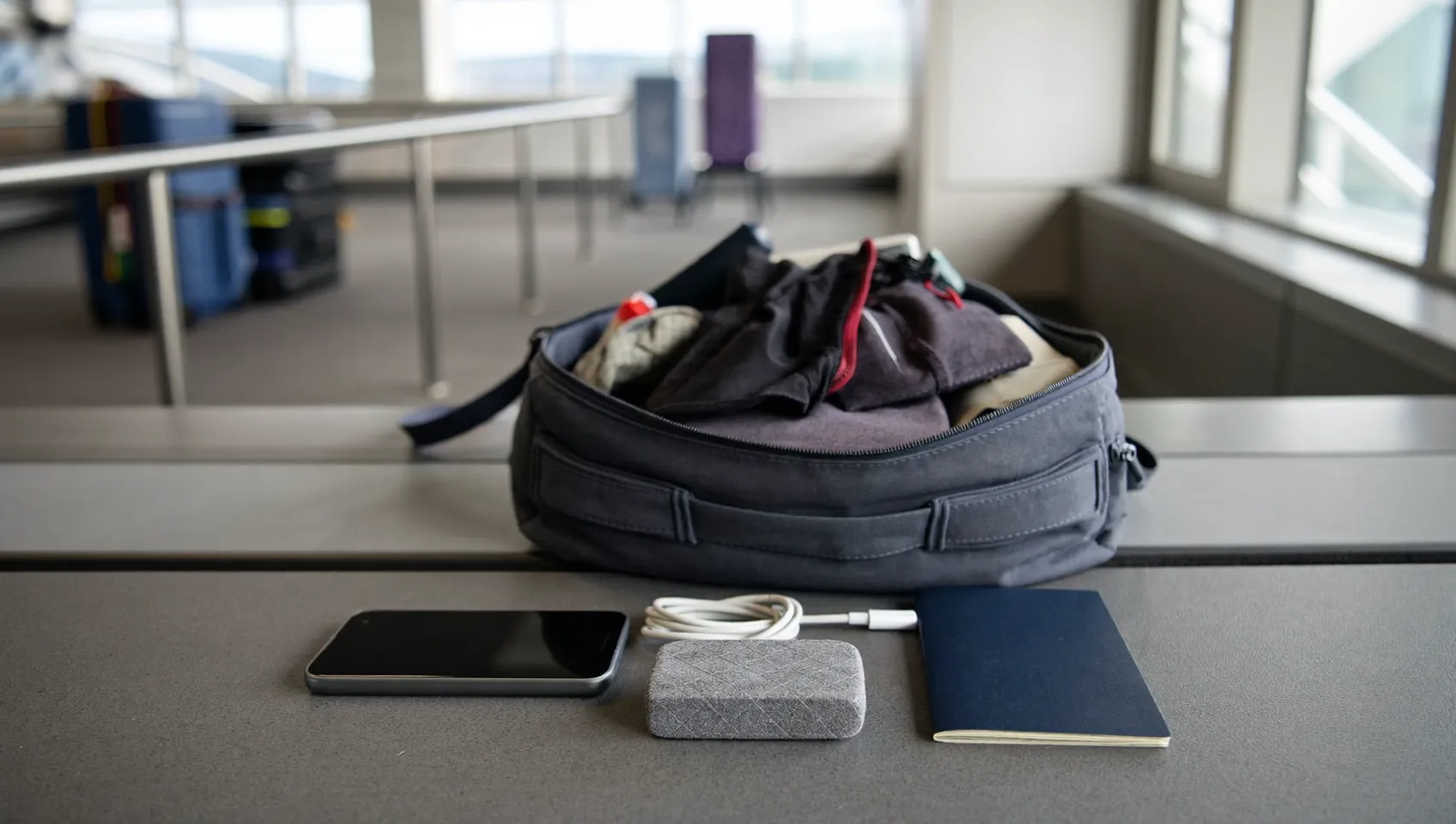
4. Place it in your hand luggage. Put the powerbank in an easily accessible compartment of your cabin bag or backpack. Before closing your suitcase, check that no battery is left inside it.
5. Be ready at security. If asked, take out and show the powerbank. If the label is unreadable, show the photo you saved.
6. Retrieve the powerbank if your bag is checked at the gate. If your cabin bag is going to be placed in the hold, be sure to remove the powerbank from it and keep it with you.
7. Don't use it during the flight. Keep the powerbank closed inside your bag; if you notice heating, smoke, or an odor, inform the cabin crew immediately.
Pre-departure checklist
On long routes, your phone is your boarding pass, map, and reservation file all at once. A powerbank is indispensable on long journeys such as the Cairo–Luxor–Aswan route, a connecting Maldives honeymoon, or a Cape Town trip. Before you leave, review this list:
- Quantity: A maximum of 2 powerbanks per person.
- Capacity: Each one doesn't exceed 100 Wh; the Wh is printed on the label, or you've calculated it from mAh and voltage.
- Approval: If you have a battery between 100–160 Wh, airline approval has been obtained.
- Label: Legible; if not, you have a photo of it on your phone.
- Location: The powerbank is in your hand luggage or on your person; there's no battery at all in checked baggage.
- Spare batteries: Camera and drone batteries are also in hand luggage.
- Charging: The powerbank was charged at home; you know you won't charge it on the plane.
- Airline: You've read the rules of the airline on each flight leg; those with an in-cabin use ban have been noted.
- Gate check: You won't forget to remove the powerbank if your cabin bag is placed in the hold.
- Condition: Any swollen, cracked, or overheating device was left at home.
If you've completed this list, your chances of having trouble at security because of a powerbank are very low.
Frequently asked questions
Can a powerbank be placed in checked baggage?
No. Powerbanks and spare lithium batteries are never placed in hold baggage due to fire risk. They can only be carried in hand luggage or on your person.
How many powerbanks can I bring on a plane?
Under the ICAO technical instruction amendment dated 27 March 2026, you may carry a maximum of 2 powerbanks per person. If traveling as a family, the limit applies separately to each passenger; distribute devices among individuals.
How do I know if a powerbank marked in mAh is suitable for air travel?
If Wh isn't printed on the label, calculate it using Wh = mAh × Volt ÷ 1,000; the voltage value is also on the label. If the result doesn't exceed 100 Wh, the powerbank is generally accepted in the cabin. Use the battery voltage in the calculation, not the USB output voltage.
Can you charge your phone with a powerbank on a plane?
Charging a powerbank on a plane is forbidden. Pegasus and AJet have also banned using the powerbank during the flight, meaning you cannot connect your phone to it. Check the current rule for other airlines before flying.
What happens to the powerbank if my cabin bag is checked at the gate?
If the cabin bag is going to be placed in the hold, the powerbank must be removed from the bag. Bring the powerbank into the cabin on your person or in a small bag that stays with you.
Is a powerbank over 100 Wh allowed on a plane?
Batteries between 100–160 Wh can only be carried in the cabin with airline approval. Batteries above 160 Wh are generally not accepted on passenger aircraft. Contact your airline before the flight to get approval.
Sources
- IATA - Safe Travel with Lithium Batteries — iata.org
- SHGM announced: In-flight powerbank charging banned - Aviation, Defense, Space and Technology News — haber.aero
- AJet banned powerbank use during flight — aa.com.tr
- Pegasus banned powerbank use on flights! - Dünya Gazetesi — dunya.com
- Powerbank Use on Planes | Battery Usage Guide | ENUYGUN — enuygun.com
My Travel Team
Travel Editor
The My Travel team prepares up-to-date travel, visa and tourism information and guides.