The recommended arrival time for Sabiha Gökçen international flights, the 60-minute check-in cutoff and the 2-versus-3-hour difference across airport pages.
For an international flight at Sabiha Gökçen, it's recommended that you be at the airport at least 3 hours before departure; this is the safe answer to the question of how early you should go. Check-in counters close 60 minutes before departure, and passengers are not accepted after this time. The Turkish-language page states 2 hours; this shorter figure is a recommendation, while the mandatory minimum requirement is 60 minutes.
In brief
- Your target should be to be at the airport 3 hours before departure; the 2 hours on the Turkish page is a shorter recommendation.
- Mandatory minimum requirement: the 60-minute-before-departure cutoff for boarding passes and the counter.
- If you arrive before the counter closes, you can get your boarding pass; if the 60-minute mark has passed, you cannot.
- During busy periods, or when travelling with extra baggage or children, leave extra buffer time.
- Check your airline's current rules for baggage and airline-specific policies.
The core rule: be at the airport 3 hours early
Sabiha Gökçen Airport recommends being at the airport at least 3 hours before scheduled departure for international flights. This recommendation appears identically on the English-language check-in page and in the frequently asked questions section.
Don't confuse two separate concepts:
- Recommended arrival time: The recommended time to be at the airport. It allows a buffer for baggage, security and passport control.
- Check-in closure: The final moment the counter stops accepting passengers. For international flights, this is 60 minutes before departure.
So 3 hours is a safety buffer, while 60 minutes is a hard limit. If you arrive before the counter closes, you can get your boarding pass. If you pass the 60-minute limit, you cannot get a boarding pass and will not be accepted onto the flight even if you hold a ticket.
Practical rule: count back 3 hours from the departure time and make that your target arrival time. Keep the time for leaving home, traffic and transfer separate from this calculation, and add them on top.
Why do sources state different durations?
There is a discrepancy between the airport's own pages. The English-language check-in page and the FAQ section say 3 hours, while the Turkish-language check-in page states 2 hours for international flights.
Read these three figures as follows:
- 3 hours: The recommendation repeated by the airport on two pages. This should be your target.
- 2 hours: The shorter recommendation on the Turkish-language page. It is not the mandatory minimum requirement.
- 60 minutes: The hard limit for boarding passes and the counter. This is the mandatory minimum requirement.
Since the durations differ from one another, it makes sense to go with the longer one. If 3 hours turns out to be too much, your loss is just waiting time; if 2 hours isn't enough, your risk of missing the flight increases. The two outcomes don't carry equal costs.
Your airline's own rule may also apply separately. We don't provide a figure for an airline rule that isn't listed here; check your airline's current rule. If you haven't bought your ticket yet, while comparing departure times on the flight ticket search page, keep in mind that early morning flights will require arriving at the airport very early.
Check-in closure and boarding pass: the 60-minute limit
For international flights, the boarding pass must be obtained at the latest 60 minutes before scheduled departure. Check-in counters also close at this time, and passenger acceptance stops.
The consequences of this rule are as follows:
- If you arrived before the counter closed, you can get your boarding pass. The problem begins after the 60-minute limit has passed.
- Even if the queue is short after the limit has passed, passengers are not accepted.
- Even if you're travelling with cabin baggage only, you cannot get a boarding pass at the counter if you arrive after it has closed.
- Check your airline's current rule for ticket change or refund conditions for passengers who arrive after closure.
If you plan to do online check-in, find out in advance how baggage drop-off and boarding pass stages work with your airline. For a detailed look at the process, see the how to do online check-in article.
In short, the 60-minute mark is not a target but a mandatory minimum that must not be exceeded. Don't base your plan on this limit.
Situations requiring earlier arrival
The recommended duration applies to a standard passenger. In the following situations, it's wise to increase your buffer at your own discretion. These are editorial suggestions, not the airport's official requirement.
- Busy periods: Queues may lengthen during public holidays, summer holidays and long weekends. Leave extra buffer during bridge holidays; you can check the international route suggestions for October 29.
- Extra baggage or special items: Items such as large suitcases, sports equipment and strollers may require additional processing.
- Travelling with children, elderly or disabled passengers: Every stage moves more slowly.
- Possibility of document issues: If your paperwork turns out to be incomplete, you'll need time to correct it. If you're planning a Schengen application, see the Schengen trusted traveller formula article.
- Uncertainty over city transport: Traffic time in Istanbul is unpredictable. Add a buffer to your calculation for arriving at the airport.
None of these situations change the 60-minute limit. They only help you stay well clear of it.
Step by step: airport departure plan
Following the sequence below reduces the risk of missing your flight.
- Verify the departure time. Compare the time on your ticket with the time in the airline's app. The time may have changed.
- Determine your target arrival time. Mark 3 hours before departure.
- Add travel time backwards. Subtract the time needed to get from home to the airport, plus a traffic buffer, from this time.
- Consider the online check-in option. Do it at whatever stage your airline allows, and download your boarding pass to your phone. See the online check-in guide for details.
- Clarify your baggage status. Check your airline's current rule for checked and cabin baggage.
- Put your passport in the front pocket of your bag. You'll need to take it out quickly at the counter and at passport control.
- Go straight to the counter when you arrive at the airport. Leave cafés or shopping until after check-in and baggage procedures.
This plan leaves a wide buffer before the hard 60-minute-before-departure limit, allowing room for unexpected delays.
Checklist before you leave
Check the following items before leaving home:
- Is your passport valid and does it meet the requirements of the country you're travelling to?
- Is the necessary visa or entry document ready? Requirements vary by country; check the current rule for the relevant country.
- Do you have your boarding pass on your phone or printed out?
- Has the departure time been verified one last time?
- Have your checked baggage allowance and cabin baggage limit been checked against the airline's current rule?
- Is your target arrival time set to 3 hours before departure?
- Does your transport plan include spare time for traffic?
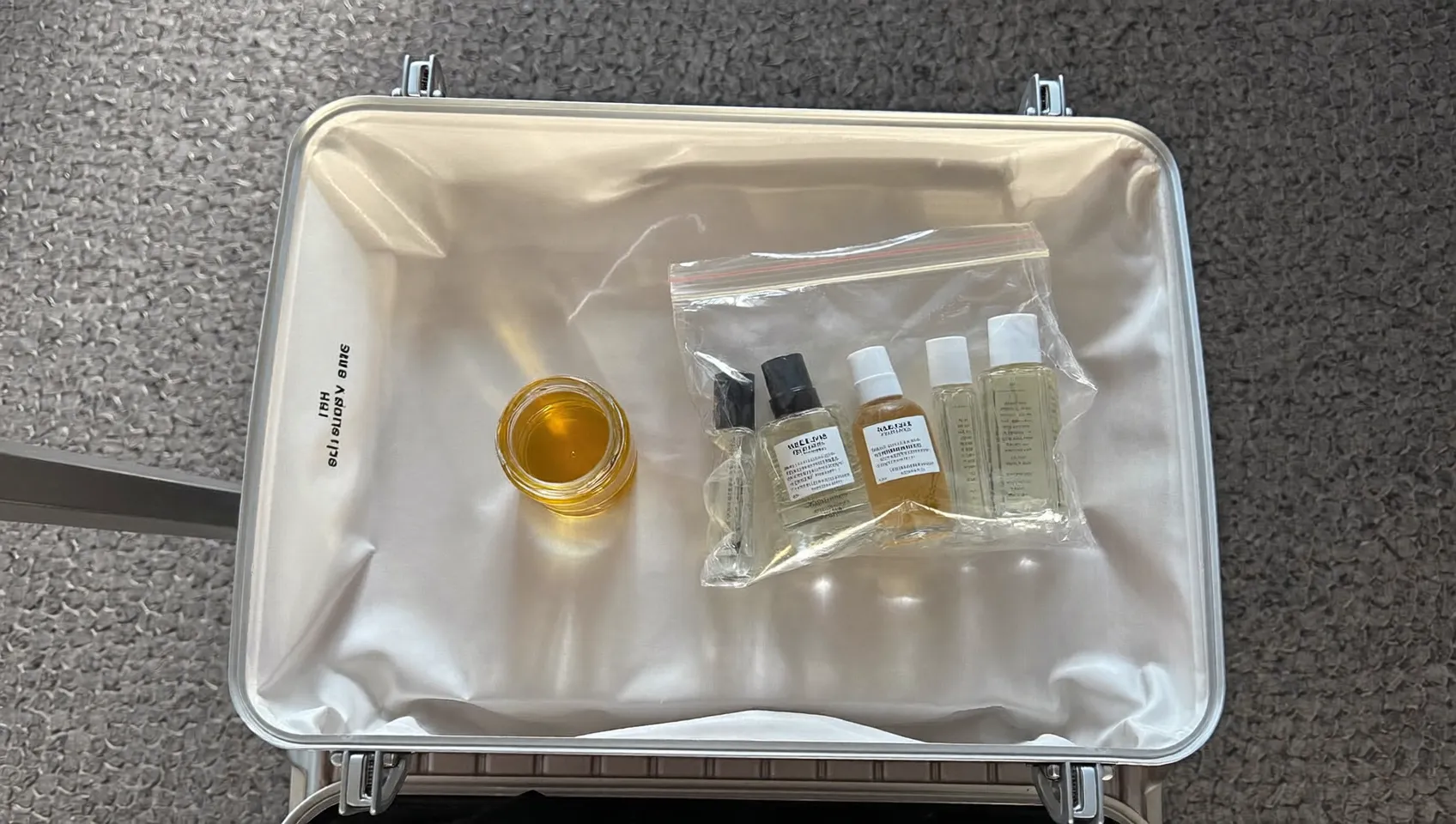
- Do liquids and electronic devices comply with cabin rules?
Plan your destination country in advance as well. For Europe, see the Germany places to visit guide; for North Africa, see the Egypt route.
Remember: 3 hours is the safe target, 2 hours is the shorter recommendation on the Turkish-language page, and 60 minutes is the hard limit that must not be exceeded.
Frequently asked questions
How many hours early should I arrive at Sabiha Gökçen for an international flight?
The airport recommends being there at least 3 hours before scheduled departure for international flights. Since the Turkish-language check-in page states 2 hours, the safest approach is to go with the longer duration.
What time does the check-in counter close for an international flight?
Counters close 60 minutes before scheduled departure for international flights. Passengers are not accepted after this time. The boarding pass must also have been obtained by this time at the latest.
The Turkish page says 2 hours and the English page says 3 hours; which should I go by?
The English-language check-in page and FAQ section say 3 hours, while the Turkish-language check-in page says 2 hours. The 2 hours is a shorter recommendation; the mandatory minimum requirement is 60 minutes. To reduce risk, target 3 hours.
If I only have cabin baggage, can I arrive later?
You still need to have obtained your boarding pass at the latest 60 minutes before departure. You should also leave a buffer for security and passport control. Check your airline's current rule for cabin baggage.
If I've done online check-in, do I still need to go to the counter?
This depends on your airline's rule and whether you have checked baggage. If you have checked baggage, confirm with your airline how the process works. See the online check-in guide for the general process.
Should I arrive earlier during public holidays and vacation periods?
Since queues may lengthen during busy periods, it makes sense to add extra buffer on top of the 3-hour recommendation. This is an editorial suggestion, not the airport's official requirement. Allow extra buffer for transport as well.
What happens if I arrive after the counter has closed?
Passengers are not accepted after the counter closes, meaning you cannot get a boarding pass. You will not be accepted onto the flight even if you have a ticket. Check your airline's current rule for ticket changes or refunds.
Sources
- Check-in — sabihagokcen.aero
- How many hours before my flight should I be at the airport? — sabihagokcen.aero
- Check-in — sabihagokcen.aero
My Travel Team
Travel Editor
The My Travel team prepares up-to-date travel, visa and tourism information and guides.